Bashar al-Assad: Collapse of a Regime in Days
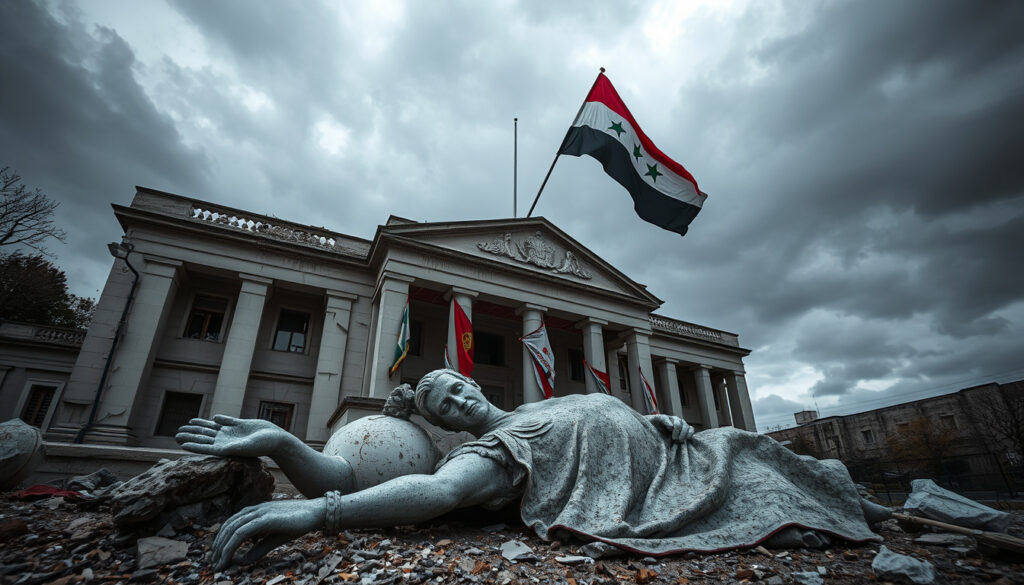
For thirteen years Syria’s civil war ground on with no end in sight — then, in a matter of days, the regime of Bashar al-Assad simply collapsed. On 8 December 2024, rebel forces seized Damascus and Assad fled to Russia, where Moscow granted asylum.
Born: 11 September 1965, Damascus · President of Syria: 20 July 2000 – 8 December 2024 · Status: Deposed, fled to Russia · Spouse: Asma al-Assad · Known for: Authoritarian rule, civil war, chemical weapons attacks
Quick snapshot
- Assad fled Damascus on 8 December 2024 (Reuters)
- Russia granted asylum on 9 December 2024 (Al Jazeera)
- Kremlin confirmed asylum (BBC News)
- Exact residence within Russia (Reuters)
- Net worth amount (unverified reports of $1–2 billion) (NPR)
- Long-term legal status in Russia (Al Jazeera)
- 8 Dec 2024: Damascus falls, Assad departs (Reuters)
- 9 Dec 2024: Asylum confirmed by Kremlin (Al Jazeera)
- 16 Dec 2024: Assad’s first statement after fall (ABC7/AP)
- Syria under rebel-led Salvation Government (Reuters)
- European nations pause Syrian asylum applications (Reuters)
- Possible international prosecution? (White House)
Key biographical details of the deposed leader.
| Attribute | Detail |
|---|---|
| Full name | Bashar Hafez al-Assad (Reuters) |
| Born | 11 September 1965, Damascus, Syria (Reuters) |
| Education | University of Damascus (medicine), specialized in ophthalmology (BBC News) |
| Spouse | Asma al-Assad (m. 2000) (NPR) |
| Children | Hafez, Zein, Karim (BBC News) |
| Religion | Alawite Islam (Reuters (biographical background)) |
| Net worth (estimated) | Unverified reports, up to $1–2 billion (NPR) |
What has happened to Bashar al-Assad?
Assad’s 24-year rule ended in hours as rebels captured Damascus with minimal resistance, forcing him to accept a Russian evacuation.
The fall of Damascus in December 2024
- Syrian rebels captured Damascus on 8 December 2024, triggering the collapse of Assad’s rule (Reuters).
- Russia’s Foreign Ministry said Assad left office and departed Syria after ordering a peaceful handover of power (NPR).
- France welcomed the fall on 8 December (French Ministry for Europe and Foreign Affairs).
Flight to Russia and asylum
- Reuters reported that Assad fled to Russia after Damascus fell (Reuters).
- Russian state media reported that Assad and his family reached Moscow (BBC News).
- The Kremlin confirmed on 9 December that Assad had been granted asylum (Al Jazeera).
The implication: Assad’s regime did not fall in a battle — it was abandoned by the army and its foreign backers, leaving Moscow as the only exit.
Why did Assad fall so quickly?
A regime that held power for 24 years under brutal repression unravelled in 72 hours — because the pillars that held it up finally crumbled.
Rebel offensive and military collapse
- Syrian army surrendered rapidly as rebels advanced from Homs to Damascus (Reuters).
- NPR reported that the army did not fight for the regime (NPR).
Lack of key ally support
- The White House said Russia, Iran, and Hezbollah no longer had the capacity to help Assad (White House).
- Russia was distracted by the war in Ukraine; Iran faced internal unrest and Israeli strikes (Reuters).
Internal regime cracks
- Economic collapse drained regime resources after 13 years of war (Reuters).
- Corruption and disenchantment among the Alawite elite weakened the inner circle (BBC News).
The pattern: external backers pulled support just as internal exhaustion made the army unwilling to die for a ruler who had already lost legitimacy.
This rapid collapse reshapes the region’s power dynamics.
Where is the Assad family now?
The family that once presided over a police state now lives under the protection of the same power that bombed Syrian cities.
Asma al-Assad’s location and health
- Asma al-Assad is in Russia with her husband (Al Jazeera).
- Reports of her leukemia treatment are unconfirmed but widely cited (NPR).
Children and extended family
- Children Hafez, Zein, and Karim are with them in Russia (BBC News).
- The extended Assad family remains scattered; some were captured or killed during the fall (Reuters).
What this means: the Assad name is no longer protection in Syria — the family’s future depends entirely on Russia’s goodwill.
Is Bashar al-Assad a US ally?
Syria–United States relations
- Assad is not a US ally; the US imposed heavy sanctions under the Caesar Act (White House).
- Syria has been listed as a state sponsor of terrorism since 1979 (NPR).
Sanctions and diplomatic status
- The US Treasury sanctioned Assad and his inner circle (Reuters).
- No US embassy in Damascus; diplomatic relations severed since 2012 (BBC News).
The trade-off: for Washington, Assad’s fall removes a hostile regime but creates uncertainty about who controls Syria’s weapons stockpiles.
Why did Russia take Assad?
Strategic interests in the Mediterranean
- Russia maintains military bases in Syria, including the naval base at Tartus (Al Jazeera).
- The base is Russia’s only Mediterranean naval foothold (Reuters).
Naval base at Tartus
- Assad’s regime was a key client for Russian arms sales and influence (NPR).
- Asylum preserves Russian influence in the region even after the regime collapsed (White House).
Geopolitical leverage
- By sheltering Assad, Russia signals to other autocrats that it will protect its clients (Al Jazeera).
- BBC reported that the asylum was granted for humanitarian reasons (BBC News).
Why this matters: Assad is now a bargaining chip for Russia in any future negotiations over Syria’s political settlement.
What is Bashar al-Assad’s religion?
Alawite minority in Syria
- Assad is an Alawite Muslim, a Shia offshoot that makes up about 10–15% of Syria’s population (Reuters (biographical background)).
- The Alawite community dominated the military and security apparatus under the Assads (BBC News).
Role of religion in rule
- Assad presented a secular image but relied on Alawite loyalists in key positions (NPR).
- The regime used sectarian rhetoric to stoke fear of Sunni extremism (Al Jazeera).
The catch: with Assad gone, the Alawite minority loses its political shield, making the community vulnerable to reprisals.
Where does Assad live now?
Location in Russia
- Assad lives in Moscow under state protection (Al Jazeera).
- Exact residence not publicly disclosed (Reuters).
Security arrangements
- Russian security services provide close protection (BBC News).
- He appears not to move freely in public (NPR).
Asylum terms
- Kremlin offered asylum indefinitely (Al Jazeera).
- Assad said his departure was not planned and occurred only after Moscow requested evacuation (ABC7/AP).
The pattern: Assad traded absolute power for a gilded cage in Moscow — the same city that once supplied his air force.
Timeline of Key Events
- 11 September 1965 – Bashar al-Assad born in Damascus (Reuters)
- 2000 – Becomes president after father Hafez’s death (BBC News)
- 2011 – Syrian civil war begins (Reuters)
- 8 December 2024 – Flees Damascus as rebels take city (Reuters)
- 9 December 2024 – Arrives in Moscow; granted asylum (Al Jazeera)
Confirmed facts
- Assad left Syria on 8 December 2024 (Reuters)
- Russia confirmed asylum on 9 December 2024 (Al Jazeera)
- He is in Moscow (BBC News)
- Family is with him (NPR)
What’s unclear
- Exact residence within Russia (Reuters)
- His net worth (unverified reports) (NPR)
- Long-term legal status in Russia (Al Jazeera)
- Asma al-Assad’s health condition (BBC News)
Upsides and Downsides of Assad’s Regime
Upsides
- Maintained Alawite minority dominance for decades (Reuters)
- Preserved state institutions through civil war (BBC News)
- Secured Russian and Iranian military backing (Al Jazeera)
Downsides
- Civil war killed over 600,000 people (Reuters)
- Chemical weapons attacks on civilian areas (NPR)
- Economy collapsed, sanctions isolated Syria (White House)
“Assad and his family are safely in Moscow.”
Russian state media, reported by BBC News
“Damascus is now liberated after decades of oppression.”
Syrian opposition spokespeople, reported by Reuters
For the Syrian people, the choice is no longer between Assad and chaos — it is between a fragile transition led by former rebels and the risk of a new cycle of violence. The international community must decide whether to back the new authority with aid and recognition, or watch Syria fragment again.
lbc.co.uk, en.wikipedia.org, novayagazeta.eu, euronews.com, irishtimes.com
For a detailed look at how the regime unravelled and the family’s new life in Russia, see Bashar al-Assads fall and exile in Moscow, which covers the same dramatic events.
Frequently asked questions
What was Bashar al-Assad’s role in the Syrian civil war?
As president, Assad commanded the military and security forces that suppressed protests with lethal force, leading to a full-scale civil war. The conflict killed hundreds of thousands and displaced millions (Reuters).
Did Assad use chemical weapons?
Multiple investigations by the UN and OPCW concluded that Syrian government forces, under Assad, used chemical weapons including sarin and chlorine against civilians (NPR).
What is the Assad family’s net worth?
Estimates vary widely, from $1 billion to $2 billion, but independent verification is impossible (NPR).
How long did Assad rule Syria?
He became president in July 2000 and ruled until December 2024 — 24 years (BBC News).
Is Syria still at war?
The civil war has largely ended with Assad’s fall, but fighting continues in some pockets, and the political transition is unresolved (Reuters).
What happens to Syria after Assad?
The rebel-led Salvation Government now claims authority, but international recognition and economic reconstruction remain uncertain (Reuters).
Who is the new leader of Syria?
No single leader has emerged; the Salvation Government’s leadership, backed by Hayat Tahrir al-Sham, is trying to form a transitional administration (Al Jazeera).
Can Assad ever return to Syria?
Legally, he faces arrest warrants from multiple countries for war crimes. Practically, Russia’s asylum prevents extradition, but a return is politically impossible (White House).
More related posts
 Robb Stark: Death and Betrayal at the Red Wedding
 New Moon March 2025: Date, Eclipse, Rituals, and Zodiac Sign
 Manny Pacquiao Net Worth, Record, and Life: Is He Still Rich
 Albert Einstein: Biography, IQ, Religious Views, and Legacy
 2024-25 NHL Standings: Final Season & Playoff Results
 John Hughes: Biography, Movies, Death, and Legacy
 David Ellison: Bio, Net Worth, and Paramount CEO Rise
 Tij Iginla: Son of Legend, Utah’s First Pick & Surgery