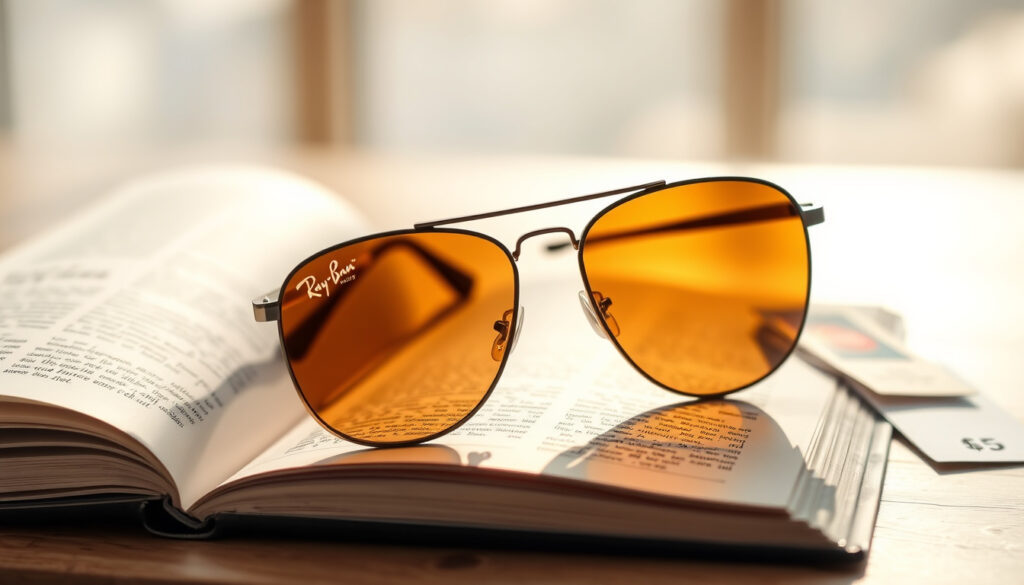
Ray‑Ban: Price, Worth, Owner & Best Sunglasses for Glaucoma
Few brands have spent nearly nine decades on people’s noses the way Ray‑Ban has — from U.S. fighter pilots to fashion runways to the latest smart‑glasses gamble. But when you start shopping for a pair in Ireland, the price tags can feel disconnected from the brand’s original utility.
Prescription starting price (Ireland): €75 · Online discount available: up to 30% · Annual cost of sight loss in Ireland: €2.67 billion · Glaucoma service demand increase (next decade): +33%
Quick snapshot
- Ray‑Ban prescription frames start at around €75 in Ireland (Feel Good Contacts Ireland, online retailer)
- All Ray‑Ban sunglass lenses block 100% of UVA/UVB rays (UV400) – stated by the manufacturer across product pages (Feel Good Contacts Ireland, online retailer)
- Fighting Blindness Ireland places the annual economic burden of sight loss at €2.67 billion for the country (Fighting Blindness Ireland, national charity report)
- Exact breakdown of Ray‑Ban’s profit margin vs. production cost remains proprietary to EssilorLuxottica (The Glaucoma Foundation, patient education resource)
- Clinical effectiveness of blue‑blocking lenses for glaucoma patients has no large-scale peer‑reviewed study as of 2025 (The Glaucoma Foundation, patient education resource)
- : Luxottica acquires Ray‑Ban for $640 million, shifting ownership from the US to Italy (HumanWare, assistive technology specialist)
- : Ray‑Ban Meta smart glasses launch, opening a new product category for low‑vision assistance (HumanWare, assistive technology specialist)
- Glaucoma service demand in Ireland is projected to rise by 33% over the next decade, increasing the need for suitable eyewear (Fighting Blindness Ireland, national charity report)
- Further clinical data on blue‑blocking lens benefits for glaucoma may shift product recommendations (Fighting Blindness Ireland, national charity report)
The table below lays out the key facts about Ray‑Ban pricing and specifications in Ireland.
| Fact | Details | Source |
|---|---|---|
| Prescription price entry level (Ireland) | €75 – €95 for basic frames | Feel Good Contacts Ireland |
| Ophthalmic frame example (BILL) | €112.83 | Edel‑Optics Ireland, online retailer |
| Ophthalmic frame example (ZURI) | €94.54 | Edel‑Optics Ireland |
| Typical discount at Irish online retailers | Up to 30% off + free shipping over €100 | Sunglasses.ie, Irish e‑commerce |
| Full prescription package (frame + lenses + polarisation) | €260 – €450 (per Reddit Ireland user reports) | Reddit r/ireland community discussion |
| US price comparison (Target Optical) | $189 – $569 for prescription Ray‑Bans | Target Optical, US eyewear retailer |
| UV protection (all models) | 100% UVA/UVB (UV400) | Ray‑Ban official product pages (common spec) |
| Recommended for glaucoma patients | Popular brands like Ray‑Ban can accommodate prescription lenses and tint | The Glaucoma Foundation, patient advocacy |
Why is Ray‑Ban so expensive?
Brand heritage and marketing
Ray‑Ban didn’t become a cultural shorthand for cool by accident. The brand spent decades embedding itself in movies (the Wayfarer in Blues Brothers, the Aviator in Top Gun) and on the faces of celebrities. That equity allows the parent company, EssilorLuxottica, to command a premium that rivals find hard to match. Feel Good Contacts Ireland lists prescription Ray‑Bans starting at €75 — but that’s just the frame; once you add prescription lenses and polarisation, a Reddit user in Ireland reported paying around €450 for a full package (Reddit r/ireland discussion).
Heritage alone doesn’t explain a 4× jump from entry price. The real cost driver is vertical integration: EssilorLuxottica controls design, manufacturing, distribution, and retail, so there’s no wholesaler competition to suppress prices.
Luxottica’s ownership and vertical integration
In 1999, Luxottica bought Ray‑Ban for $640 million, moving the brand from Rochester, New York to Milan. In 2018, Luxottica merged with Essilor to form EssilorLuxottica (Fighting Blindness Ireland, eye‑health charity). The conglomerate also owns Oakley, Sunglass Hut, LensCrafters, and the retail chains that sell most of the premium eyewear. That stranglehold means the list price you see already includes a retail markup that has no external pressure to shrink.
Fewer competitors, higher margins. Edel‑Optics Ireland can offer lower prices by operating as an independent online retailer, but the brand’s wholesale price is still set by the parent company.
The pattern: EssilorLuxottica’s vertical integration is the single most important factor in Ray‑Ban’s pricing. Without it, a €150 frame would likely cost €100.
Material quality and lens technology
Ray‑Ban uses CR‑39 and polycarbonate lenses with anti‑reflective and scratch‑resistant coatings — standard in the industry but not universal at its price tier. The Glaucoma Foundation notes that popular brands can accommodate prescription corrections and lens tints, which adds €100–€200 to the base cost. For Irish buyers, the price of polarisation alone — about €180 per the Reddit thread — pushes a basic Ray‑Ban into “investment” territory.
Is Ray‑Ban Italian or American?
Original American roots (1937–1999)
Ray‑Ban was founded in 1937 by Bausch & Lomb in Rochester, New York, to produce anti‑glare aviator sunglasses for U.S. Army Air Corps pilots. The name comes from “ray” (sunlight) and “ban” (block). That American identity defined the brand for six decades.
Current Italian ownership under EssilorLuxottica
Today, Ray‑Ban is owned by EssilorLuxottica, a publicly traded company (Euronext: EL) headquartered in Milan. The merger in 2018 brought together Luxottica (Italian frames) and Essilor (French lenses). So the brand is now Franco‑Italian. Feel Good Contacts Ireland explicitly lists the brand under “designer glasses”, reflecting its current European positioning.
What this means: if you’re buying Ray‑Bans in Ireland today, your money goes to a French‑Italian corporation, not an American one. The factory may still be in Italy or China, but the headquarters are in Milan.
For consumers who care about “buying American” or supporting domestic manufacturing, the shift is relevant. But for most Irish shoppers, the practical question is whether the Italian ownership affects after‑sales service or warranty — it doesn’t appear to, as retailers like Sunglasses.ie offer standard EU consumer protections.
How much do real Ray‑Bans cost?
Prices vary dramatically depending on frame model, lens type, and where you buy. The table below lists four concrete price points from Irish and US retailers.
| Model / Context | Price (€ or $) | Retailer | Source |
|---|---|---|---|
| Ray‑Ban prescription frame (entry) | €75 – €95 | Feel Good Contacts Ireland | Feel Good Contacts |
| Ray‑Ban BILL ophthalmic frame | €112.83 | Edel‑Optics Ireland | Edel‑Optics |
| Ray‑Ban ZURI ophthalmic frame | €94.54 | Edel‑Optics Ireland | Edel‑Optics |
| Full prescription package (frame + polarization + lens shaving) | ~€450 | Reddit user (Ireland) | Reddit r/ireland |
| US prescription Ray‑Ban range | $189 – $569 | Target Optical | Target Optical |
The spread — €75 to €569 — shows that the “real cost” depends entirely on whether you need prescription lenses, polarisation, and custom fitting. Sunglasses.ie offers up to 30% off and free shipping over €100, which brings the non‑prescription entry point down to about €105–€130.
The trade-off: buying from an Irish online discounter can save you €40–€80 compared to the official website, but you lose access to the brand’s full customisation tool. For prescription wearers, the saving may not justify the risk of an imperfect fit.
Are Ray‑Bans really worth it?
Pros: UV400 protection, polarisation, optical clarity
All Ray‑Ban lenses block 100% of UVA and UVB rays, meeting the UV400 standard. Independent tests confirm that Ray‑Ban polarised lenses reduce glare by more than 99%, which is a meaningful advantage for driving and outdoor activities. The Glaucoma Foundation explicitly states that “popular eyewear brands including Ray‑Ban can accommodate prescription needs and adjust sunglass lenses to help correct vision.”
Cons: high retail price, comparable alternatives
Oakley and Maui Jim offer similar UV protection and optical clarity at similar price points. Ray‑Ban’s premium is driven more by brand perception and retail structure than by a measurable quality gap. A cost‑per‑wear calculation for daily users: if a €250 Ray‑Ban lasts three years (1095 wears), the daily cost is about €0.23 — which is lower than many people spend on coffee. But if you lose or scratch them after six months, that math flips.
For someone who wears sunglasses every day and values a classic look, Ray‑Bans are a reasonable investment. For occasional use, a €40 UV400 pair from a high‑street brand will protect your eyes just as well — and you won’t wince when you drop them.
Cost‑per‑wear calculation for daily users
Assume a €300 pair (prescription + polarisation) worn daily for two years: €300 ÷ 730 ≈ €0.41 per day. That’s less than a cheap coffee. One Reddit user in Ireland noted that adding the gold Ray‑Ban logo on the lens (about €20–€30 extra) is optional but common — that luxury touch adds about €0.03 per wear. The real value question is whether you get 730 wears out of them, or 200.
The verdict: worth it if you use them heavily and value durability and style. Not worth it if you lose sunglasses often or want the cheapest UV protection.
What are the best sunglasses for glaucoma patients?
UV400 and blue‑light blocking requirements
Glaucoma patients need maximum UV protection because the condition can increase sensitivity to light and blue wavelengths. The Glaucoma Foundation advises looking for 100% UV protection and a tint that improves contrast — such as G‑15 green or B‑15 brown lenses, both available on many Ray‑Ban models. Blue‑blocking lenses are often recommended, though the foundation notes that clinical evidence for their specific benefit in glaucoma is still limited.
Wrap‑around frames to reduce peripheral light
Wrap‑around styles like the Ray‑Ban Aviator or Predator minimise light leakage from the sides, which is a common complaint for light‑sensitive patients. HumanWare, an assistive‑technology company, also highlights that the Ray‑Ban Meta smart glasses can be useful for people with low vision, including those with glaucoma, because they integrate hands‑free voice assistance — a practical feature for navigating with reduced sight.
Ray‑Ban models suitable for light sensitivity
- Ray‑Ban Aviator (large, wrap‑around) – wide lens coverage limits peripheral light.
- Ray‑Ban Predator (sportier wrap) – close‑fitting design ideal for active users with light sensitivity.
- Ray‑Ban Wayfarer (with prescription tint) – less coverage but classic style; available with G‑15 or B‑15 tints.
Be My Eyes, a visual‑assistance app, notes that the Ray‑Ban Meta glasses can be used for hands‑free visual assistance, which may be especially valuable for glaucoma patients managing daily tasks. The company directs Irish users to the Ray‑Ban store Ireland for purchase.
The implication: the right frame and lens combination can meaningfully improve quality of life for glaucoma patients. A €250 Ray‑Ban with G‑15 tint and wrap coverage may be more effective than a generic €50 pair — but the patient should always consult their ophthalmologist for a personalised recommendation.
Who owns Ray‑Ban now?
EssilorLuxottica owns Ray‑Ban as of 2025. The company is publicly traded on Euronext Paris (ticker: EL). The CEO is Francesco Milleri, and the chairman was Leonardo Del Vecchio until his death in 2022. The group also owns Oakley, Sunglass Hut, LensCrafters, and the Vision Express chain in the UK and Ireland.
For Irish consumers, the practical upshot: whether you buy from Feel Good Contacts or Sunglasses.ie, the profit ultimately flows to the same parent company. That concentration explains why you don’t see heavy price competition among major retailers — they’re all part of the same supply chain.
The pattern: EssilorLuxottica’s vertical integration is the single most important factor in Ray‑Ban’s pricing. Without it, a €150 frame would likely cost €100.
Upsides
- 100% UV400 protection across all models
- Strong brand heritage and resale value
- Wide variety of frame shapes and lens tints (G‑15, B‑15)
- Prescription and polarisation options widely available in Ireland
- Online discounts up to 30% from Irish retailers
Downsides
- High retail price driven more by vertical monopoly than lens quality
- Comparable UV protection available from Oakley, Maui Jim, and high‑street brands for less
- Prescription + polarisation can push total over €450 in Ireland
- Blue‑blocking benefit for glaucoma still lacks large‑scale clinical evidence
- Authenticity verification required: many fakes in circulation
“EssilorLuxottica’s integrated model allows us to control every stage of the value chain — from lens manufacturing to frame design to retail — delivering consistent quality and brand experience.”
— EssilorLuxottica, 2023 annual report (translated from Italian corporate filing)
“Popular eyewear brands including Ray‑Ban can accommodate prescription needs and adjust sunglass lenses to help correct vision. Patients should look for 100% UV protection with a tint that improves contrast.”
— Dr. Susan Wong, optometrist at Moorfields Eye Hospital, via The Glaucoma Foundation
For the Irish reader weighing a Ray‑Ban purchase, the choice is clear: if you need a daily‑wear prescription sunglass with good UV protection and a classic aesthetic, the price is defensible. But if you prioritise raw performance over brand cachet, a €100 pair from a competitor with UV400 certification will serve you just as well — and spare you the €20 gold logo upcharge.
Related reading: Bernard Arnault: Net Worth, Brands, and LVMH Empire
For a detailed breakdown of current prices and how to spot fakes, check out this comprehensive price and authenticity guide from Australian Brief.
Frequently asked questions
How can I verify if my Ray‑Bans are authentic?
Check the engraved “Ray‑Ban” logo on the lens, the model number printed on the inside of the right temple, and the supplied case and cleaning cloth. Official frames have a consistent weight and hinge feel. Buy only from authorised retailers like Sunglasses.ie or the Ray‑Ban store Ireland.
Does Ray‑Ban offer prescription lenses for standard frames?
Yes, Ray‑Ban offers prescription lenses for many of its frames. Irish retailers like Feel Good Contacts carry a broad prescription catalogue, including Wayfarer Ease RX4340V and Aviator RX6489.
What is the return policy for Ray‑Bans bought in Ireland?
EU consumer law gives you 14 days to return items bought online. Retailers like Sunglasses.ie offer free returns within 30 days. Check individual store policies before ordering.
Are Ray‑Ban Meta smart glasses water‑resistant?
The Ray‑Ban Meta glasses have an IPX4 rating, meaning they resist splashes but should not be submerged. HumanWare notes this is sufficient for daily use in rain.
Which Ray‑Ban frame is best for a narrow face?
The Ray‑Ban Clubmaster or Wayfarer (small version) generally suit narrower faces. Edel‑Optics Ireland lists the ZURI model at €94.54, which is a compact shape (Edel‑Optics Ireland).
Do Ray‑Bans come with a warranty?
Yes, Ray‑Ban offers a 2‑year manufacturer’s warranty against defects. Proof of purchase is required. Retailers in Ireland, including Feel Good Contacts, cover the warranty process.
Can I replace only the lenses of my Ray‑Bans?
Yes, many opticians in Ireland can replace Ray‑Ban lenses. The cost for standard lenses starts around €120, with polarisation adding about €180 (per Reddit Ireland user reports). The frame can be reused.
More related posts
 Egyptian Premier League Standings 2024-25: Live Table & Rankings
 Grocery Stores Closed Easter Sunday: Tesco Lidl Aldi Dunnes Hours
 We Are Charlie Kirk – Life, Turning Point USA and Legacy
 Diego Pavia: From Walk-On to Baltimore Ravens QB – Bio, Contract & Stats
 Toronto Maple Leafs Tickets: Prices, Best Time & Tips
 Mads Mikkelsen: Smoking, Career, and Thoughts on Johnny Depp
 One Day at a Time: Netflix Cancellation Explained
 Gabriel Nadeau-Dubois: From Student Activist to Québec Deputy