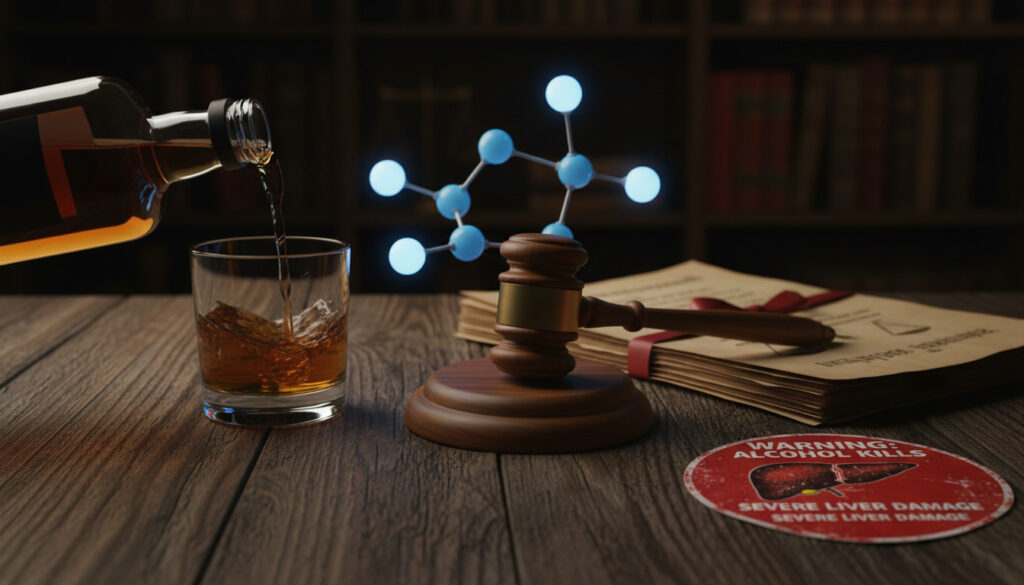
Is Alcohol a Drug – Science, Law and Health Risks
Alcohol occupies a unique position in modern society. While 86.5% of American adults have consumed it during their lifetimes, many hesitate to classify ethanol alongside heroin or cocaine. Yet pharmacologically, ethanol functions as a central nervous system depressant and psychoactive substance that alters brain chemistry, mood, and behavior.
The question extends beyond semantics. Global health organizations track alcohol alongside other controlled substances, noting its contribution to over 200 diseases and approximately 4% of worldwide deaths. Understanding its classification requires examining both molecular mechanisms and cultural frameworks.
This analysis explores the scientific definitions, legal distinctions, and health implications that determine whether alcohol belongs in the category of drugs—and what that classification means for public health policy.
Is Alcohol a Drug?
| Question | Answer | Source | Implication |
|---|---|---|---|
| Is ethanol a drug? | Yes, CNS depressant | Pinerest Health | Affects brain function like other depressants |
| Is it psychoactive? | Yes | Medical Authorities | Alters mood and cognition |
| Most used drug? | Yes in US, 2nd globally | Epidemiological Data | Higher usage than most illicit substances |
| Legal classification? | Regulated, not scheduled | WHO/ICD-10 | Legal status differs from pharmacological |
Key Insights
- Alcohol enhances GABA and inhibits NMDA receptors, creating sedative effects
- WHO identifies no safe consumption level for cancer risk
- Third leading preventable cause of death in the United States
- Not scheduled under DEA guidelines despite psychoactive properties
- Consumption continuum creates graduated health risks unlike binary illicit drugs
- Acute use temporarily lowers blood pressure; chronic use causes neuroadaptation
Alcohol Drug Snapshot
| Chemical Name | Ethanol |
| Drug Class | Central Nervous System Depressant |
| DEA Schedule | Not Scheduled |
| Lifetime Use (US Adults) | 86.5% |
| Global Consumption Rank | 2nd (after caffeine) |
| Primary Mechanism | GABA enhancement/NMDA inhibition |
| IARC Carcinogen Classification | Group 1 |
| Annual Global Sales (2017) | $1.5 trillion |
What Type of Drug Is Alcohol?
Pharmacological Definition
Ethanol operates as a multifaceted psychoactive compound. It enhances gamma-aminobutyric acid (GABA) transmission, the brain’s primary inhibitory neurotransmitter, while simultaneously blocking excitatory NMDA receptors. This dual action produces the characteristic relaxation and impaired judgment associated with drinking. Additionally, alcohol triggers the release of opioid neuropeptides in the nucleus accumbens, activating the brain’s reward circuitry through dopamine disinhibition.
Central Nervous System Effects
The substance’s impact varies by dosage. At low concentrations, users experience euphoria and talkativeness. As blood alcohol content rises above 1 g/L, effects escalate to slowed cognition, potential unconsciousness, and respiratory depression. Chronically, the brain undergoes neuroadaptations leading to tolerance and physical dependence.
Alcohol exhibits stimulant properties at low doses—increasing heart rate and sociability—before shifting to pure depressant effects as consumption continues. This dual-phase mechanism distinguishes it from pure sedatives like barbiturates.
Why Is Alcohol Legal If It’s a Drug?
Historical and Cultural Context
Alcohol predates written records as humanity’s oldest fermented beverage. Unlike substances discovered or synthesized in modern laboratories, ethanol has maintained continuous ritualistic and recreational use across civilizations. This deep historical embedding created cultural infrastructure that survived even the United States’ Prohibition era from 1920 to 1933, which ultimately failed due to enforcement challenges and organized crime proliferation.
Regulatory Differences
Legally, alcohol occupies a distinct category from illicit drugs. While the DEA does not schedule ethanol, the WHO’s ICD-10 classifies it alongside other psychoactive substances. Most nations permit adult possession and consumption, typically restricting sales by age—21 in the United States—while prohibiting public intoxication. This regulatory approach treats alcohol as a controlled commodity rather than contraband.
Those monitoring consumption patterns might note variations in serving environments, from Milky Way Cocktail Bar – Montréal Location and Facts to domestic settings.
Is Alcohol More Dangerous Than Other Drugs?
Health Risks Comparison
Excessive alcohol use contributes to over 200 diseases, ranking as the third leading preventable cause of death in America. Unlike many illicit substances, its health impacts follow a consumption continuum—even one daily drink may increase health risks by 0.4%. The International Agency for Research on Cancer classifies alcohol as a Group 1 carcinogen due to acetaldehyde formation. Chronic risks encompass liver disease, cardiomyopathy, dementia, and polyneuropathy.
Contrast this with other depressants like barbiturates or benzodiazepines, which share alcohol’s mechanism of slowing brain activity and causing slurred speech, but lack the same cultural normalization. Stimulants such as amphetamines produce opposite physiological effects—increased energy and heart rate—while alcohol’s biphasic nature creates unique risk profiles.
Approximately 4% of worldwide deaths in 2004 traced directly to alcohol, split evenly between acute overdoses or accidents and chronic conditions like liver disease. This mortality rate rivals or exceeds many strictly controlled substances.
Usage Statistics
Accessibility drives prevalence. As the most commonly used drug in the United States and the second most consumed psychoactive substance globally after caffeine, alcohol’s ubiquity creates widespread exposure. Global sales exceeded $1.5 trillion in 2017, reflecting integration into social and economic systems that illegal markets cannot match.
Public health analyses indicate alcohol ranks among the highest for overall societal harm when weighing factors like addiction potential, physical damage, and economic cost—often exceeding ratings for illegal drugs.
How Has Alcohol Regulation Evolved?
- Ancient Origins: Fermented beverages appear in archaeological records predating written history, establishing alcohol as humanity’s earliest psychoactive substance.
- Prohibition Era (1920-1933): The United States banned production and sale of alcoholic beverages nationwide, leading to the rise of organized crime and unsafe homemade alcohol.
- Repeal and Regulation: Constitutional amendment ended Prohibition due to enforcement failures, establishing the modern framework of age restrictions and licensed sales.
- Modern Controls: Current regulations emphasize drunk driving laws, public intoxication statutes, and health warnings, with WHO guidelines now emphasizing no safe consumption level.
Is Alcohol Definitely a Drug? Separating Scientific Fact from Legal Definition
| Scientifically Established | Legally Uncertain |
|---|---|
| Acts as CNS depressant via GABA/NMDA mechanisms | Not classified as controlled substance by DEA |
| Causes tolerance, withdrawal, and addiction | Legal status varies by jurisdiction and age |
| Produces dose-dependent psychoactive effects | Cultural exemptions in drug-free workplace policies |
| Linked to over 200 diseases and cancer | Regulatory frameworks treat as commodity vs. contraband |
Why Does Alcohol’s Dual Classification Matter?
The disconnect between pharmacological reality and legal status creates public health challenges. When societies fail to recognize alcohol as a drug, prevention messaging loses impact. Healthcare systems must reconcile treatment models—addressing alcohol use disorder with similar clinical rigor as opioid addiction—while policymakers navigate the economic reality of trillion-dollar industries.
Understanding ethanol’s true classification informs everything from prenatal care guidelines to cancer screening protocols. The substance’s integration into celebrations, as seen in travel and leisure sectors offering Last Minute All Inclusive Vacations – Best Deals Under $1000, demonstrates how deeply the normalization runs.
What Do Health Authorities Say About Alcohol?
Alcohol is classified as a central nervous system depressant and psychoactive substance that slows brain activity, producing effects ranging from relaxation to impaired judgment and sedation.
— Pinerest Health
No safe level of alcohol consumption exists for cancer and health risks.
— World Health Organization, 2023
Alcohol enhances GABAergic neurotransmission and inhibits excitatory NMDA receptors, leading to sedation and loss of inhibitions.
— NIH/PMC Research
Key Takeaways on Alcohol as a Drug
Ethanol meets every pharmacological criterion for drug classification: it alters neurochemistry, produces tolerance and dependence, and causes measurable harm at population levels. While legal frameworks distinguish it from scheduled narcotics primarily for historical and economic reasons, medical consensus treats alcohol as a significant psychoactive substance requiring careful regulation. Recognition of its true classification remains essential for accurate risk assessment and public health policy.
Frequently Asked Questions
Is alcohol the most used drug?
Yes, in the United States alcohol represents the most commonly used and abused drug, with 86.5% of adults reporting lifetime consumption. Globally, it ranks second only to caffeine among psychoactive substances.
Is beer alcohol a drug?
Beer contains ethanol, which functions pharmacologically as a central nervous system depressant. Regardless of beverage type—beer, wine, or spirits—the active drug compound remains identical.
Is alcohol a gateway drug?
Research has not established causation, though alcohol’s ubiquity and legal accessibility mean it often precedes experimentation with other substances. Correlation exists between early alcohol use and later drug use, but multiple factors contribute.
Can you overdose on alcohol?
Yes, alcohol poisoning occurs when blood alcohol content exceeds approximately 1 g/L, potentially causing respiratory depression, unconsciousness, and death. This represents acute toxicity distinct from chronic disease.
How quickly does alcohol affect the brain?
Effects begin within minutes of consumption as ethanol crosses the blood-brain barrier, with initial impacts on inhibitory GABA receptors and subsequent effects on coordination and judgment appearing rapidly.
Why do some people say alcohol isn’t a drug?
This misconception stems from legal distinctions and cultural normalization. Because alcohol is legally regulated rather than prohibited, and integrated into social rituals, many perceive it as distinct from pharmacological definitions of drugs.
More related posts
 1000 Euro to CAD: Live Exchange Rate Converter & Comparison
 Trans Mountain Pipeline News – Status, Costs and Impacts
 ClassDojo: What It Is, How to Use It, and Is It Free
 12 Days of Christmas Lyrics – Full Verses, Meanings and History
 Cast of Jack Ryan: TV Series and Movie Actors List
 Donny Osmond: Health, Family, and Net Worth Facts
 Lawrence Bishnoi: Verified Facts and Latest Developments