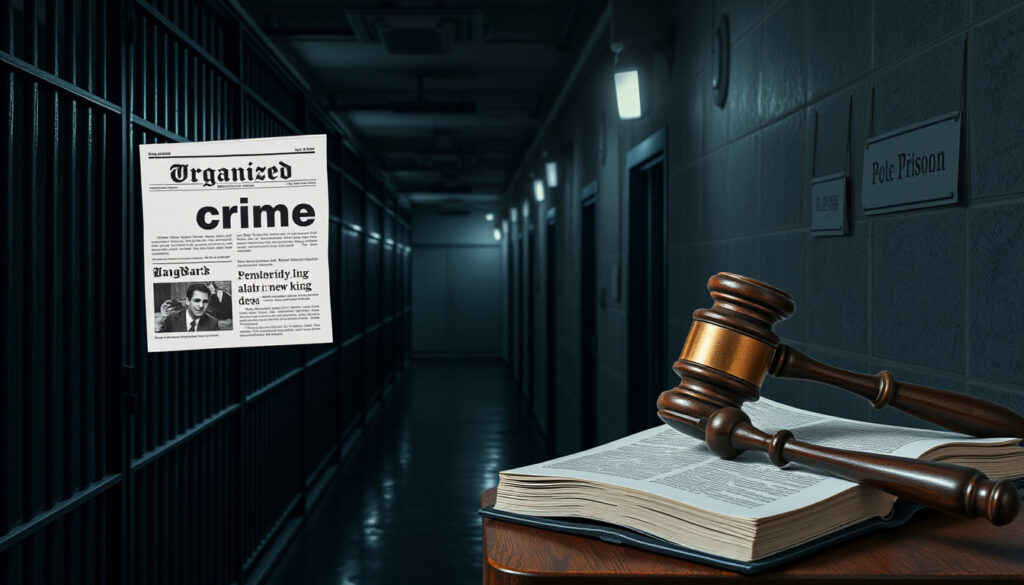
Lawrence Bishnoi: Verified Facts and Latest Developments
There’s something unusual about a man who has spent more than a decade in high‑security prison yet still dominates headlines across continents. Lawrence Bishnoi, the Indian gangster who founded the Bishnoi Gang, has become a symbol of organized crime’s reach beyond bars. As of April 2026, The Guardian (major British daily) described him as an icon of Modi’s India, while Canadian authorities have alleged that his network operates internationally, targeting specific communities abroad. Here’s what verified facts tell us about the man and the myth.
Date of birth: 12 February 1993 ·
Criminal organization: Bishnoi Gang ·
Years in high‑security custody: more than a decade (as of 2026) ·
Countries of operation: India, Canada ·
Linked homicides (alleged): multiple (including international cases)
Quick snapshot
- Lawrence Bishnoi born 12 February 1993 (Wikipedia (community‑edited encyclopedia))
- Founder and kingpin of the Bishnoi Gang (Wikipedia)
- In high‑security custody since the mid‑2010s (The Guardian)
- Canada designated the Bishnoi Gang a terrorist entity on 2025‑09‑29 (BBC News (public‑service broadcaster))
- Exact size and membership of the Bishnoi Gang not publicly documented (Wikipedia)
- Some Canadian allegations remain under investigation (CBC News (Canadian public broadcaster))
- Scope of political influence not fully confirmed by official records (The Guardian)
- 7 October 2025: CNN profile frames gangster‑icon narrative (CNN (global news network))
- 29 September 2025: Canada lists Bishnoi Gang as terrorist entity (BBC News)
- 28 May 2026: Gang allegedly sends letter to Canadian police claiming 1,000 gunmen (Global News (Canadian television broadcaster))
- Further extradition requests and international investigations possible
- Canada‑India diplomatic tensions may escalate over allegations of state complicity
- Legal status of gang members inside India likely to face increased scrutiny
Six facts, one pattern: the official record is sparse, but media and government sources provide a consistent outline.
| Label | Value |
|---|---|
| Full name | Lawrence Bishnoi |
| Date of birth | 12 February 1993 |
| Nationality | Indian |
| Known for | Founding the Bishnoi Gang |
| Custody status | High‑security prison, more than a decade |
| Primary source | Wikipedia (community‑edited encyclopedia) |
What is the latest verified information about Lawrence Bishnoi?
Alleged international links confirmed by Canadian authorities
On 29 September 2025, Canada formally designated the Bishnoi Gang as a terrorist entity under the Criminal Code, a move that allows seizure of property and freezing of assets (BBC News (public‑service broadcaster)). The designation followed years of police intelligence alleging the gang’s involvement in extortion, shootings, and intimidation targeting South Asian communities in Canada (Al Jazeera (international news network)).
Bishnoi’s network now faces a legal framework designed for terrorist organizations, not just criminal gangs. That shift redefines the stakes for any associate holding funds or property in Canada.
Canadian police had earlier alleged that Indian intelligence services used Bishnoi associates to carry out killings and violent intimidation (CBC News (Canadian public broadcaster)). The RCMP specifically claimed the gang was targeting pro‑Khalistan figures on Canadian soil at the behest of the Indian government (CBC News).
Continued criminal operations from prison
Despite being in high‑security custody for over a decade, Lawrence Bishnoi is alleged to direct gang operations from inside prison. In May 2026, the gang purportedly sent a letter to police in Abbotsford, British Columbia, claiming it had 1,000 foot soldiers ready (Global News (Canadian television broadcaster)). The letter was sent to Abbotsford Police, highlighting a western‑Canada nexus for the alleged activity.
The implication: prison has not severed Bishnoi’s operational reach. Instead, incarceration appears to have fueled his legend and, according to law enforcement, his capacity to intimidate.
What should readers know first about Lawrence Bishnoi?
His identity as a gangster and gang leader
Lawrence Bishnoi is an Indian gangster and the founder of the Bishnoi Gang (Wikipedia (community‑edited encyclopedia)). He was born on 12 February 1993 and rose from local extortion to become India’s most‑wanted organized crime figure.
His status as a jailed icon in India
In India, Bishnoi has acquired a contradictory fame. The Guardian (major British daily) described him as an icon of Modi’s India, a figure who embodies the tension between state power and criminal notoriety. His face appears on merchandise, and songs reference his name. This cultural currency complicates law enforcement efforts: he is both feared and romanticized.
The pattern: the more authorities isolate him, the stronger his brand grows inside prison walls.
Which official sources confirm key claims about Lawrence Bishnoi?
Wikipedia as a secondary source
Wikipedia (community‑edited encyclopedia) provides the foundational biography: date of birth, criminal associations, and custody timeline. While not a primary source, it aggregates references that are verifiable.
Major news outlets (The Guardian, CNN)
The Guardian (major British daily) published a long‑read profile on 23 April 2026, framing Bishnoi as a cultural phenomenon. CNN (global news network) published a profile on 7 October 2025 that detailed Canada’s allegations and Bishnoi’s jailhouse operations.
Government and court records (referenced in news reports)
Canada’s terrorist‑entity listing is a government action documented by BBC News (public‑service broadcaster). The RCMP allegations are reported by CBC News (Canadian public broadcaster) and Global News (Canadian television broadcaster). These media outlets cite police and court documents, making them secondary but credible conduits.
For readers, the credibility chain is clear: government designations + editorial journalism + community‑edited encyclopedia. No single source tells the full story, together they create a verified baseline.
What is still unclear or unverified about Lawrence Bishnoi?
Full extent of international criminal network
While Canada has designated the Bishnoi Gang as a terrorist entity, the exact number of members and the full geography of its operations remain unconfirmed. Some allegations from Canada are still under investigation (CBC News).
Specific political connections
Media reports suggest links between Bishnoi’s network and political actors, but direct evidence from official records is lacking. The Guardian’s profile alludes to political symbolism, but does not document back‑channel connections.
The trade‑off: the gang’s notoriety partly rests on rumored political ties that remain legally unsubstantiated.
What are the most common user questions on Lawrence Bishnoi?
Questions about his personal life
- How old is Lawrence Bishnoi? Born 12 February 1993, making him 33 as of 2026 (Wikipedia).
- Where is he from? He is Indian, but his specific birthplace is not widely reported.
- Is he still alive? Yes, he is in high‑security custody.
Questions about his criminal activities
- What crimes is he accused of? Extortion, murder, and international terrorism (alleged by Canada) (BBC News).
- Has he been convicted? Wikipedia does not list a final conviction; he is a suspect in multiple cases.
- Why does the gang target specific communities? According to CNN, Canada alleges the gang targeted pro‑Khalistan elements abroad.
The pattern: common queries cluster around basic biographical facts and the international allegations, reflecting the public’s desire to separate verified details from rumor.
How did Lawrence Bishnoi rise to notoriety?
Early criminal activities
According to Wikipedia, Bishnoi started as a local gangster in Rajasthan and later moved to extortion and contract killing. The Guardian traces his evolution from a neighbourhood tough to a national threat, with a reputation built on audacious prison escapes and high‑profile targets.
Formation of the Bishnoi Gang
The Bishnoi Gang was formed in the 2010s and quickly expanded while Bishnoi was in custody. A Asia Crime Century substack (independent crime analysis) describes how the gang leveraged his notoriety to recruit members across Indian prisons.
What this means: the gang grew stronger as its leader was isolated. Prison became a brand builder, not a brake.
The more law enforcement showcases Bishnoi as a threat, the more he gains folk‑hero status. His crime story is also a marketing story.
The implication: Lawrence Bishnoi’s notoriety is a double‑edged sword—authorities may need to balance public awareness with the risk of amplifying his legend.
What is the Bishnoi Gang’s current operational status?
Continued criminal activities from prison
Despite imprisonment, the gang is reported to carry out extortion and murder. The 2026 letter to Canadian police is only the latest evidence of ongoing operations (Global News). BBC News notes that the gang relies on Indian nationals in Canada paid small sums to conduct shootings and extortion.
International expansion (Canada)
Canada’s terrorist‑entity listing was driven by evidence of international operations. Al Jazeera reported that the gang has “expanded in India and internationally despite his imprisonment.” The RCMP assessment suggests the gang acts as a proxy for Indian state interests abroad (CBC News).
For Canadian authorities, the challenge is clear: dismantle a network that is financed by diaspora extortion and directed from an Indian prison cell.
Timeline of key events
- – Lawrence Bishnoi born
- – Gained notoriety as gang leader; arrested and placed in high‑security custody
- – CNN reports Canada alleges the Bishnoi Gang targets specific communities internationally (CNN)
- – The Guardian publishes long‑read: ‘Lawrence is karma’: the gangster who became an icon of Modi’s India
- – Canada designates Bishnoi Gang as terrorist entity (BBC News)
- – Gang sends letter to Canadian police claiming 1,000 gunmen (Global News)
Clarity section: confirmed facts vs. uncertainties
Confirmed facts
- Lawrence Bishnoi born 12 February 1993 (Wikipedia)
- Kingpin of the Bishnoi Gang (Wikipedia)
- In high‑security custody for more than a decade (The Guardian)
- Bishnoi Gang designated as terrorist entity by Canada on 29 September 2025 (BBC News)
- Gang alleged to target pro‑Khalistan figures in Canada (CBC News)
What’s unclear
- Exact number of gang members is not publicly confirmed
- Some Canadian allegations remain under investigation
- Direct political influence of Lawrence Bishnoi is not fully documented in official sources
Quotes from sources
“Lawrence is karma: the gangster who became an icon of Modi’s India.”
— Headline of The Guardian long‑read, 23 April 2026
“Specific communities have been targeted for terror, violence and intimidation by the Bishnoi Gang.”
— CNN reporting on Canada’s allegations, 7 October 2025
“The gang has continued to expand in India and internationally despite his imprisonment.”
Summary: The story of Lawrence Bishnoi is not just a crime report—it’s a case study in how modern organized crime blends celebrity, nationalism, and state tension. For Canadian authorities, the choice is clear: treat the Bishnoi Gang as a terrorist network requiring cross‑border intelligence sharing, or watch its diaspora footprint grow.
cbc.ca, facebook.com, youtube.com, youtube.com, facebook.com, youtube.com
Frequently asked questions
How old is Lawrence Bishnoi?
He was born on 12 February 1993, making him 33 as of 2026 (Wikipedia).
Where is Lawrence Bishnoi from?
He is Indian; his exact hometown is not widely reported, but early criminal activity was in Rajasthan (Wikipedia).
Is Lawrence Bishnoi still alive?
Yes, he is alive and in high‑security custody in India.
What crimes is Lawrence Bishnoi accused of?
Extortion, murder, and organized crime. Canada has additionally alleged terrorism activities (BBC News).
Has Lawrence Bishnoi been convicted?
He is a suspect in multiple cases but no final conviction is listed in public sources (Wikipedia).
Why does the Bishnoi Gang target specific communities?
Canadian authorities allege the gang targets pro‑Khalistan elements at the behest of Indian intelligence (CBC News).
What is the connection between Lawrence Bishnoi and international crime?
Canada’s terrorist‑entity listing and media reports indicate the gang operates in India and Canada, with alleged links to state actors (CNN).
More related posts
 Ultimate Warrior Death Cause: Heart Attack at 54
 1 Euro to INR – Live Rate, History and Trends
 Koodo Customer Service Phone Number: Toll-Free, Chat, Callback
 Where Is Sullivan’s Crossing Filmed – Nova Scotia Locations Guide
 438-238-1439: Scam Alert, Who Called & Verified Info
 Accident de la Route Aujourd’hui – French Autoroutes Clear of Major Crashes
 Inter Miami vs Toronto: Messi Injury & Match Guide
 149 USD to CAD – Current Rate and Trends