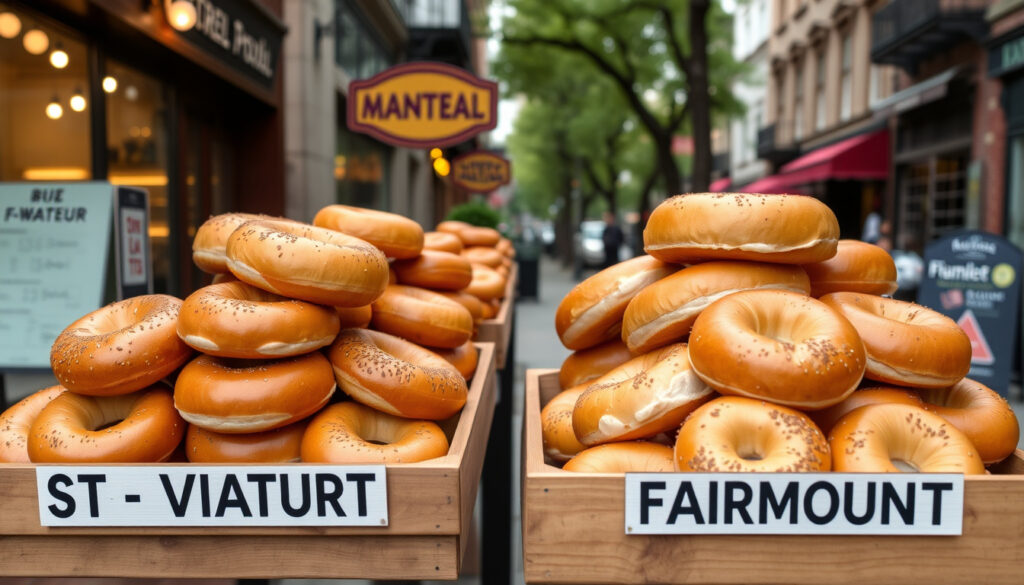
Best Bagels in Montreal – St-Viateur vs Fairmount Guide
The Mile End neighborhood of Montreal has long been considered the heart of Canada’s bagel culture, where two legendary shops separated by just a block have sparked friendly rivalry for decades. St-Viateur Bagel and Fairmount Bagel have become more than neighborhood bakeries—they represent a genuine culinary divide that divides Montrealers and draws visitors from around the world.
Both establishments adhere to the traditional method of boiling bagels in honey-sweetened water before baking them in wood-fired ovens, creating the signature dense yet chewy texture and slightly sweet flavor that distinguishes Montreal-style bagels from their New York counterparts. This time-honored technique, passed down through generations of immigrant families, continues to produce bagels that locals consider essential to the city’s identity.
For those seeking the best bagels in Montreal, understanding the history, characteristics, and subtle differences between these iconic shops can help guide the decision of which to visit first.
What Are the Best Bagel Shops in Montreal?
The city’s bagel landscape is dominated by two historic establishments, though several other worthy options exist for visitors willing to explore beyond the Mile End.
Montreal’s bagel scene centers on two legendary competitors in the Mile End neighborhood. Both shops use the traditional method of honey-water boiling and wood-fired baking that defines authentic Montreal-style bagels.
| Shop | Location | Hours | Signature Style |
|---|---|---|---|
| St-Viateur Bagel | 263 Rue Saint-Viateur Ouest | Open 24/7 | Thin, dense, garlic-forward |
| Fairmount Bagel | 74 Avenue Fairmount Ouest | Limited hours | Thick, fluffy, fennel-tinged |
| Other MTL shops | Various neighborhoods | Varies | Traditional methods |
St-Viateur Bagel operates four bakeries, three cafes, and a food truck across the city, making it more accessible for visitors staying outside the Mile End. Its flagship location at 263 Rue Saint-Viateur Ouest is famous for the wall of photographs that lines its interior, documenting decades of devoted customers and celebrity visitors.
Fairmount Bagel takes a different approach, maintaining a single original location at 74 Avenue Fairmount Ouest. This decision has become part of the shop’s identity, signaling a commitment to tradition over expansion. The bakery has been recognized by National Geographic as one of Canada’s 50 Places of a Lifetime and won MTL Blog’s Best Bagels award in 2014.
- St-Viateur was founded in 1957, nearly four decades after Fairmount
- Fairmount holds the distinction of Canada’s first bagel shop, established in 1919
- Both shops use wood-fired ovens and honey water in their preparation
- Sesame seed has become the most popular variety at both locations
- Poppy seed was the original popular flavor before sesame took over
- Both shops were founded by Russian immigrants
St-Viateur vs Fairmount: Which Montreal Bagel is Better?
The question of which bagel shop produces the superior product has sparked what locals informally call the “Bagel War,” though preferences among Montrealers remain split quite evenly between the two. The distinction comes down to texture and seasoning philosophy.
Fairmount Bagel Characteristics
Fairmount bagels tend to be thicker and fluffier than their competitor, with a chewier texture that many describe as more substantial. The wood-fired flavor is slightly more pronounced in Fairmount batches, and the bagels carry a distinctive sweetness with floury undertones. The fennel seeds used in their seasoning blend contribute an herbal note that sets their offerings apart.
These characteristics make Fairmount bagels particularly well-suited for toasting or supporting heavier toppings like smoked salmon and cream cheese. The denser structure holds up well to slicing and stands up to substantial fillings without becoming gummy.
St-Viateur Bagel Characteristics
St-Viateur bagels present a different profile—thinner and denser with a crispier exterior that can be notably harder to slice through. The sesame flavor comes through more boldly, and notable garlic notes give these bagels a savory edge. A surprising saltiness emerges when eating St-Viateur bagels plain, becoming more pronounced when paired with cream cheese.
Some reviewers have noted that St-Viateur bagels may stale more quickly than Fairmount offerings, making them best enjoyed shortly after purchase. The thinner profile makes them ideal for lighter toppings or eating plain as a snack.
Taste Test Findings
When compared side-by-side in blind tastings, Fairmount has been slightly favored by some reviewers for its pronounced wood-fired flavor, though the difference between the two is minimal. Food critics and casual visitors alike have found that both establishments produce high-quality bagels worthy of the reputation they have earned over decades.
St-Viateur offers unique specialty flavors like rosemary and sea salt that Fairmount does not produce. Both shops’ bagels are so well-seasoned that they can be enjoyed plain without any spreads or toppings.
The choice between the two often comes down to personal preference regarding texture and seasoning intensity rather than quality, as both represent authentic examples of Montreal bagel tradition.
What Makes Montreal Bagels Unique?
Montreal bagels differ fundamentally from the New York style in both preparation method and final texture, creating a distinctly different eating experience that has earned international recognition.
The Honey-Water Boiling Method
Unlike most other bagel varieties, Montreal bagels are boiled briefly in water sweetened with honey before baking. This step, which New York-style bagels typically skip, creates the signature slightly sweet taste and contributes to the dense, chewy interior that characterizes authentic Montreal bagels. The honey in the water also helps create the golden crust that develops during wood-fired baking.
Wood-Fired Oven Baking
Both St-Viateur and Fairmount bake their bagels in wood-fired ovens, a practice that imparts subtle smokiness and helps achieve the distinctive crisp exterior with a tender interior. The high heat of wood firing creates the signature texture that has defined Montreal bagels for over a century. This traditional method cannot be replicated by conventional ovens, which is why many consider the authentic product only available in Montreal.
Comparing Montreal and New York Styles
New York bagels are typically larger, softer, and more bready in texture compared to their Montreal counterparts. They are often boiled in plain water without sweetener and baked in standard deck ovens. The Montreal approach produces bagels that are denser, smaller, and more focused on the bread itself rather than as a delivery vehicle for heavy toppings. This distinction has sparked ongoing debate among bagel enthusiasts about which style deserves the title of North America’s best.
The term “Montreal bagel” is not legally protected, so similar styles may appear in other cities. However, the combination of traditional preparation methods, quality ingredients, and decades of refinement in the city itself creates a product that many argue cannot be truly replicated elsewhere.
Where to Find the Best Bagels in Montreal’s Neighborhoods?
While the Mile End neighborhood remains the epicenter of Montreal’s bagel culture, several other areas offer quality options for visitors exploring the city.
The Mile End: Birthplace of Montreal Bagels
The Mile End district, where both St-Viateur and Fairmount operate within a block or two of each other, represents the spiritual home of Montreal bagel culture. The neighborhood has evolved alongside these bakeries, becoming known for its artistic community, coffee shops, and diverse culinary offerings. Walking between the two iconic shops provides visitors with a tangible sense of the friendly rivalry that has defined this corner of Montreal for generations.
Beyond bagels, the Mile End offers other Montreal culinary treasures, including Jewish delis, artisan coffee roasters, and boutiques that reflect the neighborhood’s multicultural character. Visitors often make a pilgrimage to both bagel shops, sometimes purchasing from each to conduct their own personal taste test.
Beyond Mile End
St-Viateur has expanded beyond the Mile End with multiple locations throughout the city, making their bagels more accessible to visitors staying in other neighborhoods. These additional locations maintain the same traditional preparation methods and quality standards as the original bakery, though some purists argue the flagship store produces the best results.
For those seeking other bagel options in Montreal, the city’s various neighborhoods offer smaller bakeries and shops that employ similar traditional methods, though none have achieved the legendary status of the Mile End establishments. Exploring these alternatives can reveal subtle variations on the Montreal bagel tradition while avoiding the queues that often form at the famous shops.
Practical Tips for Getting Bagels in Montreal
Understanding the practical aspects of visiting Montreal’s famous bagel shops can help visitors plan their experience and avoid common disappointments.
Hours and Queuing
St-Viateur’s 24/7 operation makes it uniquely accessible among Montreal bagel shops. Visitors can purchase fresh bagels at any hour, though early morning often brings the freshest batches straight from the oven. Fairmount operates with more limited hours, so visitors planning to purchase from their single location should check their schedule in advance to avoid disappointment.
Both shops can experience significant queues during peak periods, particularly on weekends and around meal times. Visiting during off-hours or weekdays typically results in shorter wait times and easier access to freshly baked batches. For more information, you can check out the running up that hill lyrics. running up that hill lyrics
What to Order
Sesame seed bagels represent the most popular option at both St-Viateur and Fairmount, though the original flavor that first gained popularity was poppy seed. For those seeking something different, Fairmount offers the Power Bagel—an organic whole wheat variety studded with raisins, walnuts, and sunflower seeds. St-Viateur distinguishes itself with specialty flavors like rosemary and sea salt that its competitor does not produce.
Vegan and Specialty Options
Traditional Montreal bagels from both St-Viateur and Fairmount contain eggs, making them unsuitable for strict vegans. However, both shops offer plain varieties without egg wash or toppings that may work for some vegetarians. Visitors with specific dietary requirements should inquire about ingredients when ordering to ensure the bagels meet their needs.
Both shops produce bagels that are flavorful enough to enjoy without toppings, though classic combinations like cream cheese, lox, and smoked meat remain popular among locals and visitors alike.
The History of Montreal Bagels
The story of Montreal bagels begins with immigrant communities that brought their baking traditions to Canada and refined them over more than a century.
- 1919: Isadore Shlafman, a Russian immigrant, establishes Fairmount Bagel, making it Canada’s first bagel shop and marking the beginning of Montreal’s bagel tradition.
- 1930s–1940s: Bagels gain popularity in Montreal’s Jewish neighborhoods, with multiple small operations serving the growing community.
- 1957: St-Viateur Bagel opens its flagship location at 263 Rue Saint-Viateur Ouest, introducing a second major player to the Montreal bagel scene.
- Late 20th century: Both shops solidify their reputations as Montreal institutions, with generations of families continuing to frequent the same bakeries their grandparents visited.
- 2014: Fairmount Bagel receives recognition from MTL Blog as Best Bagels, reaffirming its place among the city’s culinary elite.
- Present day: Both shops continue operating using traditional methods, with St-Viateur expanding to multiple locations while Fairmount maintains its single-original-location philosophy.
What Remains Uncertain About Montreal’s Best Bagels
While Montreal’s bagel culture is well-documented, certain aspects remain open to interpretation and continue to spark debate among enthusiasts.
| Established Information | Uncertain or Debated |
|---|---|
| Both shops use honey water and wood-fired ovens | Which shop produces objectively better bagels |
| Fairmount founded in 1919, St-Viateur in 1957 | Exact origin of the Montreal bagel style |
| Montreal bagels differ from New York style | Whether location affects bagel quality |
| Both shops have loyal customer bases | Consensus on which is the “best” choice |
| Sesame is the most popular seed variety | Optimal time to purchase freshest bagels |
The question of which Montreal bagel is truly “best” remains genuinely subjective, with passionate advocates on both sides. Rather than seeking a definitive answer, visitors are encouraged to try both and form their own opinions based on personal preference for texture, seasoning, and flavor profiles.
The Cultural Significance of Montreal Bagels
Bagels have become intertwined with Montreal’s identity, representing the city’s immigrant history, its commitment to traditional methods, and its ongoing pride in local culinary achievements. The rivalry between St-Viateur and Fairmount has become part of the folklore that makes Montreal distinctive among North American cities.
For Montrealers, the choice between the two legendary shops often reflects family traditions, neighborhood allegiances, and personal taste developed over years of consumption. Visitors who engage with this local debate participate in a ritual that connects them to the community and its history.
The continued operation of both shops using methods virtually unchanged from their founding demonstrates how traditional food preparation can persist alongside modernization. In an era of mass production and industrial food manufacturing, Montreal’s bagel shops maintain craft practices that most other North American cities have abandoned.
Beyond their role as food purveyors, St-Viateur and Fairmount have become landmarks in their own right, featured in travel guides, culinary magazines, and social media documentation that reaches audiences far beyond Montreal’s borders. This visibility has helped establish the city as a destination for serious food enthusiasts seeking authentic culinary experiences.
Sources and Expert Opinions
Information about Montreal’s bagel shops comes from multiple sources, including local food critics, travel publications, and direct observation by visitors.
The difference between the two is minimal—Montreal bagels are special regardless of which shop you choose.
Food reviewers who have conducted side-by-side comparisons note that both St-Viateur and Fairmount produce excellent bagels that reflect the traditional Montreal method. The slightly more pronounced wood-fired flavor of Fairmount has been cited as a distinguishing factor by some critics, though others find St-Viateur’s garlic notes equally compelling.
Both bagels are so well-seasoned that they don’t require cream cheese or spreads to be enjoyable plain.
This observation from food critics highlights how Montreal bagels differ from many other varieties, where toppings serve to enhance bland bread. At their best, authentic Montreal bagels stand as complete foods worthy of attention on their own merits.
Summary and Recommendations
For visitors seeking the best bagels in Montreal, both St-Viateur and Fairmount represent essential stops that embody the city’s culinary traditions. St-Viateur’s 24/7 availability and multiple locations make it more accessible, while Fairmount’s single-location commitment to tradition appeals to purists. The Mile End neighborhood provides the authentic context for experiencing this rivalry firsthand.
Trying both shops in a single visit remains the most practical approach for those seeking to form their own opinions. Neither shop can be definitively declared superior—preferences depend on individual taste regarding texture, seasoning, and desired eating experience. Visiting after a game at the nearby Dek Hockey de la Capitale rink makes for an excellent afternoon outing in the area.
Frequently Asked Questions
Both shops offer in-person ordering at their counters. St-Viateur’s multiple locations provide more purchasing options throughout the city, while Fairmount’s single location requires visiting the Mile End bakery directly.
Are there vegan bagels in Montreal?
Traditional Montreal bagels contain eggs, making them unsuitable for strict vegans. Some plain varieties may work for vegetarians depending on specific ingredients used.
What makes Montreal bagels different from New York bagels?
Montreal bagels are boiled in honey water and baked in wood-fired ovens, producing a denser, sweeter product compared to New York-style bagels.
Which bagel shop is better: St-Viateur or Fairmount?
Preferences are genuinely split among Montrealers. Fairmount offers thicker, fluffier bagels with fennel notes, while St-Viateur provides thinner, denser options with garlic and sesame flavors.
What are the most popular bagel flavors at these shops?
Sesame seed bagels represent the most popular variety at both St-Viateur and Fairmount. Poppy seed was the original favorite before sesame overtook it in popularity.
Where are the bagel shops located?
St-Viateur Bagel is located at 263 Rue Saint-Viateur Ouest, while Fairmount Bagel operates at 74 Avenue Fairmount Ouest. Both are in the Mile End neighborhood, separated by a block or two.
Are Montreal bagels worth the visit?
Montreal bagels have achieved international recognition for their unique preparation method and distinctive flavor. Both St-Viateur and Fairmount maintain traditional practices that food enthusiasts consider worth experiencing firsthand.
More related posts
 12 Days of Christmas Lyrics – Full Verses, Meanings and History
 90000 USD to CAD – Live Rates, History & Exchange Tips
 140 lbs to kg Conversion and Weight Context
 Johnny Gaudreau Death: Crash, Driver, Family Aftermath
 2024-25 NHL Standings: Final Season & Playoff Results
 How to Change a Tire: Step-by-Step Guide with Safety Rules
 September 2025 Canada Direct Deposit – CPP, OAS & EI Dates
 Paddy Pimblett Next Fight – Latest News on Date and Opponent