Texas Flooding Flash Flood Camp Mystic – Timeline Causes Casualties
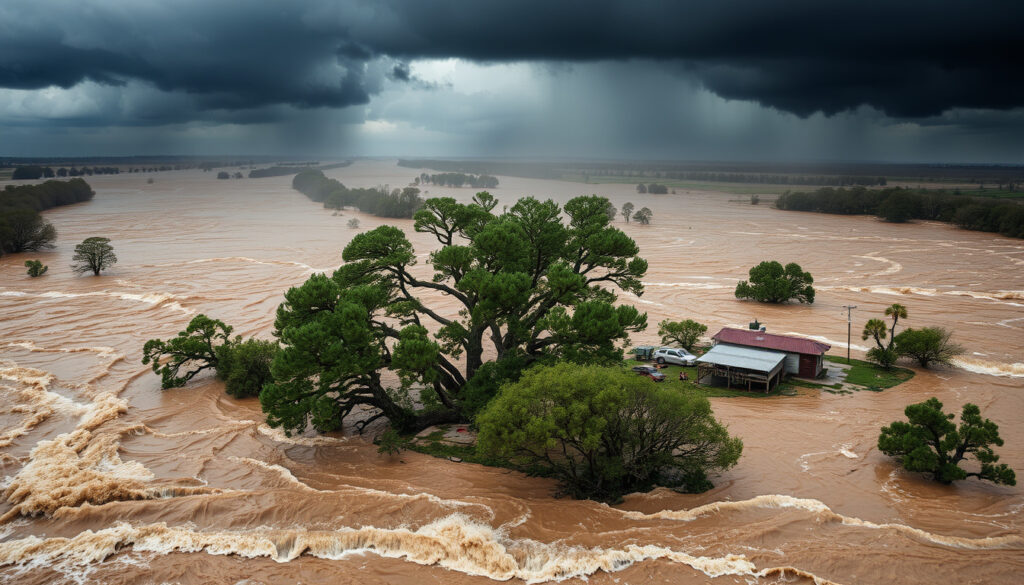
The flooding unfolded rapidly as the Guadalupe River at Hunt rose 26 feet in just 45 minutes, reaching 37.52 feet—surpassing all previous records dating back to 1987. Camp Mystic, situated directly on the riverbanks, bore the brunt of the disaster. Rescue teams conducted widespread operations across the Texas Hill Country as emergency officials grappled with the scope of the catastrophe.
Authorities have confirmed that no Hunt County (northeast Texas) involvement exists in this event. All documented cases pertain to Kerr County and surrounding areas approximately 100 miles west of Austin. The National Weather Service had issued flash flood emergencies warning of a “large and deadly flood wave” moving downstream, though the timing of alerts came after the worst damage had already occurred at the camp.
What Caused the Flash Flood at Camp Mystic?
Meteorological conditions aligned to create catastrophic flooding across Central Texas. A mid-level trough carrying tropical moisture from the eastern Pacific interacted with stalled thunderstorms over the region beginning July 3. This system dropped what meteorologists described as four months’ worth of rain in a concentrated period, saturating the ground before the main flood event.
Weather Patterns and Precipitation Rates
The National Weather Service documented rainfall rates of 2 to 3 inches per hour during the peak of the storm. Some watersheds received totals exceeding 20 inches of rain. This extreme precipitation fell on ground already saturated from earlier moisture, preventing absorption and accelerating runoff into the Guadalupe River and its tributaries.
A mesoscale convective vortex developed with enhanced tropical moisture, a relatively rare atmospheric configuration for this region. The combination of these factors created the perfect conditions for rapid flash flooding. The river rose approximately 29 feet in the Hunt area within a matter of hours, transforming what had been a typical summer evening into a life-threatening emergency.
Geographic and Structural Vulnerabilities
Camp Mystic’s location directly on the banks of the Guadalupe River made it exceptionally vulnerable to riverine flooding. At least eight buildings at the camp sat within a FEMA-designated floodway, meaning they occupied zones legally identified as high-risk for inundation. Despite this designation, the camp had operated for decades as a summer destination for young women.
The river reached its peak of 37.52 feet at approximately 5 a.m. on July 4, shattering previous records. The USGS gauge at Hunt stopped recording data after that point, suggesting the equipment became damaged or submerged. The previous record had stood since 1987, underscoring the unprecedented nature of this event.
The Guadalupe River at Hunt rose from below flood stage to a record 37.52 feet in approximately four hours, a rate that left little time for evacuation even if warnings had been issued earlier.
Emergency Planning and Approval Status
Records indicate that Camp Mystic’s emergency plans had been approved by the Texas Department of State Health Services just two days before the flood, according to ABC News reporting. However, specific details about the contents of those plans remain unavailable. No comprehensive organized evacuation appears to have been conducted before water began entering structures.
| Fact | Details | Source |
|---|---|---|
| Event Type | Flash flood along Guadalupe River | Official |
| Trigger | Mesoscale convective vortex with tropical moisture | NWS |
| River Rise | 29 feet in Hunt area | NWS/USGS |
| Peak Level | 37.52 feet at Hunt (record) | USGS |
| Rainfall Rate | 2-3 inches per hour | NWS |
| Total Precipitation | Exceeding 20 inches in some watersheds | NWS |
What Is the Timeline of the Camp Mystic Flood Event?
The progression from heavy rain to catastrophic flooding occurred over roughly 36 hours, though the most destructive phase lasted less than six hours. Understanding this sequence helps explain why so many campers were caught unaware despite the region’s general awareness of flash flood risks.
The Night Before: Building Conditions
On the evening of July 3, a mid-level trough began depositing tropical moisture across Central Texas. Stalled thunderstorms developed over the region, dropping heavy rain that would eventually total four months’ worth in some locations. Campers at Camp Mystic were settling in for the night, unaware that flood conditions were developing upstream.
The camp, operated as a Christian girls’ camp, hosted approximately 750 campers along with staff members. July 4 was a holiday, and activities continued despite the rain. Some campers reported hearing thunder and rain, but no immediate cause for alarm existed at that point.
Early Morning July 4: Water Rising
Around 1 a.m. CDT on July 4, heavy rain and thunder began waking campers at Camp Mystic. Initial flooding was reported in some cabins as water began seeping into structures. Campers including Georgia and Eloise Jones noted water intrusion in their cabin, marking the beginning of the emergency.
By approximately 2 a.m., some groups began self-evacuating from lower-lying cabins. The Jones sisters and other campers moved to higher ground as water levels continued rising. The river was rising rapidly during this period, though the full scope of the danger had not yet become apparent to those at the camp.
At 4:05 a.m., the Guadalupe River at Hunt reached 21.99 feet, crossing into major flood stage. The river had risen over 10 feet in just one hour. This rapid rise far exceeded the capacity of most observers to comprehend the imminent danger. Campers who had evacuated low-lying structures faced continued flooding as water spread beyond the riverbanks.
The river surged 26 feet in 45 minutes between approximately 4:05 and 4:50 a.m., a rate that transformed a river already at flood stage into a catastrophic force.
Dawn: Peak Flood and Emergency Response
At approximately 5 a.m., the river crested at 37.52 feet, the highest level ever recorded at that gauge. The monitoring equipment stopped recording data moments later. This peak occurred more than an hour before the first flash flood emergency specifically covering the Hunt area was issued.
The National Weather Service issued its first flash flood emergency for Kerrville and Center Point at 5:34 a.m., warning of a “large and deadly flood wave” moving down the river. A separate emergency for the Hunt area followed at 7:24 a.m., over an hour after the river had already peaked. Additional emergencies covered Comfort at 10:45 a.m.
By mid-morning, six flash flood emergencies had been issued across Kerr, Bandera, and Comal counties. The warnings came too late for those already trapped by rising waters at Camp Mystic, though they proved vital for communities downstream that had time to evacuate.
Casualties and Rescue Efforts in the Texas Camp Mystic Flood
The human toll of the Camp Mystic flood proved devastating. By July 7, officials had confirmed 27 deaths at Camp Mystic alone, encompassing both campers and counselors. Among those killed was director Dick Eastland, whose role overseeing the camp made him a central figure in the community’s grief.
Death Toll Details
The 27 deaths at Camp Mystic included both campers and staff members. More than 20 children were initially reported missing in the chaos following the flood, though many were later accounted for through reunification efforts. The camp hosted approximately 750 campers at the time of the disaster.
Statewide, at least 135 deaths had been confirmed in connection with the Central Texas flooding. Kerr County recorded at least 117 of those deaths, with 161 people listed as missing in early reports. The scope of casualties made this one of the deadliest flood events in Texas history.
| Location | Confirmed Deaths | Notes |
|---|---|---|
| Camp Mystic | 27 | Campers, counselors, including director Dick Eastland |
| Kerr County | 117+ | 161 missing in early reports |
| Statewide | 135+ | Across multiple Central Texas counties |
| Camp La Junta | Not specified | Escapes reported, no confirmed deaths |
Rescue Operations
Following the flood, rescue teams conducted extensive operations across the Texas Hill Country. The scale of the disaster required resources from multiple jurisdictions. One group of children managed to escape Camp Mystic during the flood, finding safety amid the chaos.
Post-flood rescues focused on widespread Hill Country response amid what officials described as “catastrophic” damage. Some campers from Camp La Junta, including the Jones sisters and brothers Braeden and Brock Davis, had self-evacuated during the night and escaped harm. Their accounts provided the first eyewitness descriptions of the flood’s rapid progression.
Search and recovery efforts continued for days as teams worked to locate missing individuals and account for all campers and staff members present at the time of the flood. The combination of high water, debris, and the remote nature of some affected areas complicated these operations.
Current Status and Evacuations at Camp Mystic
As of July 2025 reports, recovery operations were ongoing across the flood zone. The focus had shifted from rescue to recovery and assessment. No updates extending into 2026 appeared in available sources, with the event consistently described as a historical tragedy still in its acute phase.
Camp Status
Camp Mystic remained closed following the disaster. The camp’s physical infrastructure had sustained significant damage, and the site was not expected to resume operations in the near term. The Christian girls’ camp, which had served communities for decades, faced an uncertain future amid grief and rebuilding efforts. For those looking ahead, you can explore the millors llocs per viatjar al desembre at $millors llocs per viatjar al desembre.
Other camps in the area, including Camp La Junta, also suspended operations following the flood. The broader Texas Hill Country camping industry faced questions about safety protocols and the adequacy of existing emergency preparedness measures for flood scenarios.
Recovery efforts in Kerr County continued as of mid-July 2025, with additional flood watches issued for the Kerrville area following the initial disaster.
Emergency Management Response
The Texas Department of State Health Services had approved Camp Mystic’s emergency plans approximately two days before the flood, though the specifics of those plans and their implementation remained unclear in available reports. Emergency management officials faced questions about the adequacy of warning systems and evacuation procedures.
The National Weather Service issued a flood watch on July 7 for the Kerrville area extending through the evening, demonstrating continued elevated risks even after the main flood event. A separate moderate risk for flash flooding was identified for July 12, affecting the Lampasas River area—a related but distinct event from the Camp Mystic disaster.
When Did the Flash Flood at Camp Mystic Occur?
The following chronology captures key moments from the development of conditions through the peak flood and subsequent emergency response:
- July 3, late evening: Mid-level trough with tropical moisture from the eastern Pacific develops into stalled thunderstorms over Central Texas, dropping heavy rain
- July 4, approximately 1 a.m.: Heavy rain and thunder wake campers at Camp Mystic; initial flooding reported in some cabins
- Approximately 2 a.m.: Some campers begin self-evacuating low-lying cabins as water rises
- 4:05 a.m.: Guadalupe River at Hunt reaches 21.99 feet (major flood stage), rising over 10 feet in one hour
- Approximately 5 a.m.: River crests at record 37.52 feet; gauge stops recording; at least eight Camp Mystic buildings in FEMA floodway affected
- 5:34 a.m.: National Weather Service issues flash flood emergency for Kerrville and Center Point, warning of “large and deadly flood wave”
- 7:24 a.m.: Flash flood emergency issued for Hunt area, over an hour after river peak
- 10:45 a.m.: Additional emergency issued for Comfort as flooding spreads
- July 7: Camp Mystic confirms 27 deaths; 82 total deaths statewide
What Is Confirmed Versus What Remains Unclear
Transparency about what is verified versus what requires further confirmation helps maintain accuracy while the situation remains active.
| Confirmed Information | Unconfirmed or Unclear |
|---|---|
| 27 deaths at Camp Mystic | Complete list of individual casualties |
| 135+ deaths statewide | Details of Camp Mystic emergency plans |
| River reached 37.52 feet at Hunt | Exact timing of first water intrusion |
| Six flash flood emergencies issued | Number of minor injuries |
| Camp held approximately 750 campers | Status of individual missing persons cases |
| NWS issued alerts after peak | Complete assessment of property damage |
Historical Context of Guadalupe River Flooding
The July 2025 flood surpassed all previous recorded levels at the Hunt gauge, which had maintained records since the 1980s. The previous record, set during floods in 1987, had stood for nearly four decades as a benchmark for riverine flooding in Kerr County.
Central Texas has a documented history of flash flood events, particularly during summer months when tropical moisture interacts with stationary weather patterns. The region’s topography, characterized by steep hills and narrow river valleys, creates conditions where water can accumulate rapidly with devastating effect.
Climate patterns affecting the area have shown increased variability in recent years, with some research suggesting more frequent extreme precipitation events. The specific combination of factors present on July 3-4, 2025—including the mesoscale convective vortex and enhanced tropical moisture—represented a relatively uncommon but not unprecedented atmospheric configuration.
The Texas Hill Country has long been recognized as having elevated flash flood risk, yet the scale of the July 2025 event exceeded what historical data would have suggested as plausible. Officials noted that the river rose approximately 29 feet in the Hunt area within a matter of hours, a rate that challenged existing emergency preparedness frameworks. Those seeking to understand the broader context of river monitoring and flood history can find additional resources through the USGS.
Official Responses and Source Statements
The National Weather Service issued flash flood emergencies explicitly warning of a “large and deadly flood wave” moving down the Guadalupe River.
— National Weather Service emergency bulletin, July 4, 2025
Campers like Georgia and Eloise Jones described waking to water intrusion in their cabin, marking the beginning of a night of survival as floodwaters rose around the camp.
— ABC News field reporting, July 2025
The Texas Department of State Health Services had approved Camp Mystic’s emergency plans approximately two days before the flood, though specifics remained unavailable.
— ABC News reporting
Key Takeaways from the Camp Mystic Flood Disaster
The July 2025 flash flood at Camp Mystic ranks among the deadliest natural disasters in Texas history, killing at least 27 people at the camp alone and 135 statewide. The Guadalupe River at Hunt rose to record levels, surging 26 feet in 45 minutes to 37.52 feet. Rescue operations continued across the Texas Hill Country as officials investigated the adequacy of warning systems and emergency preparedness at summer camps in flood-prone areas.
For those seeking to understand similar events or preparing for emergencies in flood-prone regions, additional information about regional weather patterns and emergency preparedness is available through emergency management resources.
Is Camp Mystic currently open or operating?
No. Camp Mystic remained closed following the July 2025 flood disaster. Recovery operations were ongoing as of mid-July 2025 reports, and the camp’s future status had not been determined.
What caused the flash flood at Camp Mystic?
A mesoscale convective vortex with tropical moisture from the eastern Pacific created stalled thunderstorms that dropped 2-3 inches of rain per hour. Totals exceeded 20 inches in some watersheds, causing the Guadalupe River to rise approximately 29 feet in hours.
How many people died at Camp Mystic?
Officials confirmed 27 deaths at Camp Mystic, including campers, counselors, and camp director Dick Eastland. More than 20 children were initially reported missing before many were reunited with families.
Were there warnings issued before the flood?
The National Weather Service issued flash flood emergencies starting at 5:34 a.m. on July 4, but the Hunt-area emergency came at 7:24 a.m., over an hour after the river had already peaked at 37.52 feet.
How can I support flood victims in Texas?
Official recovery assistance information and donation opportunities were being coordinated through Texas Emergency Management officials. The Red Cross and other humanitarian organizations were active in the affected regions.
What is the geographic area affected?
The primary impact occurred in Kerr County, Texas Hill Country, approximately 100 miles west of Austin and 65 miles northwest of San Antonio. No Hunt County (northeast Texas) involvement was reported in connection with this event.
More related posts
 Cooper Flagg: Age, Salary, Net Worth, and Why He’s Famous
 Precio Dolar Canadiense a Pesos Mexicanos – Current Rate and Forecast
 Rice Krispie Square Recipe: How to Make Soft Gooey Treats
 How Did Heath Ledger Die – Cause, Age and Key Facts
 Lisa Gilroy: Viral Comedian and Brooklyn Nine-Nine Star
 Toronto Maple Leafs Tickets: Prices, Best Time & Tips
 Cast of Locke & Key: Main Actors and Roles by Season
 DJI Osmo Action 5 Pro – Specs, Battery and GoPro Comparison