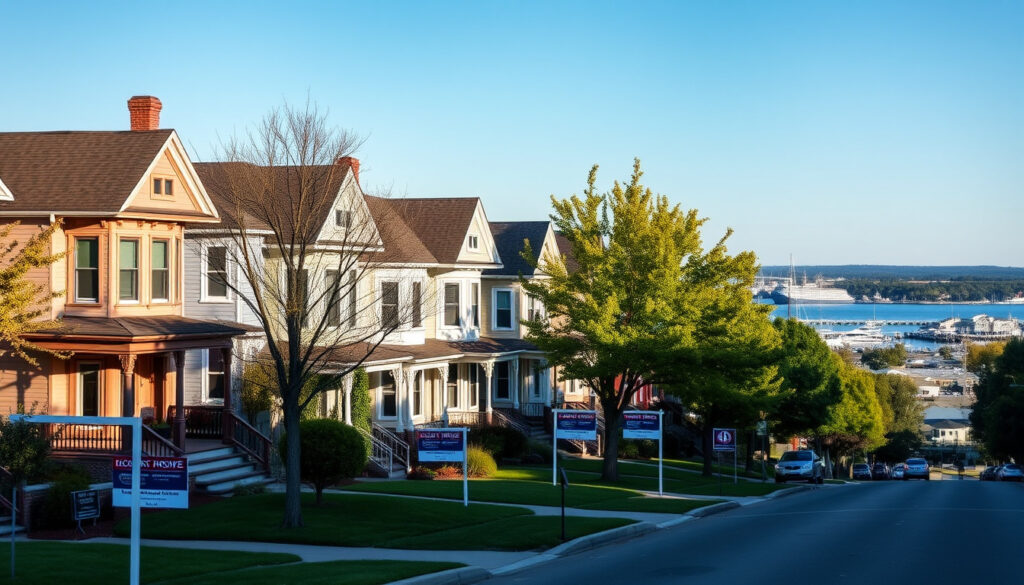
Houses for Sale Saint John – Listings Prices Neighborhoods 2026
Saint John, New Brunswick, offers a diverse housing market with options ranging from affordable starter homes to luxury waterfront properties. As of early 2026, the city lists between 154 and 174 homes for sale, with average prices hovering around $338,000 to $341,870. The market showed significant growth in 2025, with average sale prices reaching $366,989 across all property types—a 7.3% increase from the previous year.
For buyers considering Saint John, understanding current inventory, neighborhood dynamics, and price trends is essential for making informed decisions. This guide provides a comprehensive overview of the local real estate landscape, drawing from multiple listing services, market analyses, and regional statistics.
What Houses Are Currently for Sale in Saint John NB?
As of early 2026, active listings in Saint John range from 154 to 174 homes, according to Zillow and other real estate platforms. These properties span detached single-family homes, townhouses, condos, and multi-family dwellings. Recent listings showcase the variety available to buyers in the area.
- Active inventory dropped below 2,000 province-wide by December 2025, the lowest level since spring 2024
- New listings reached 156 in January 2026, compared to 152 across all of New Brunswick
- Properties typically stay on market approximately 22 days before selling, according to Redfin data
- Luxury segment includes high-end options such as a $1,995,000 home at 139 Germain St and waterfront estates exceeding $4 million
- Listings feature various amenities including mature trees, custom backyards, and proximity to the waterfront
- Homes range from budget-friendly options under $200,000 in areas like Milford to premium properties in Rothesay exceeding $640,000 on average
| Metric | Saint John NB | NB Average | Trend |
|---|---|---|---|
| Average Sale Price | $366,989 (2025) | $329,000 | +7.3% YoY |
| January 2026 Price | $338,000 | $329,000 | Above provincial avg |
| Active Listings | 154–174 | Varies | Buyer-friendly |
| New Listings (Jan 2026) | 156 | 152 total NB | Moncton: 324 |
| Sales Transactions | 1,907 (2025) | N/A | +6% YoY |
| Days on Market | ~22 days | Varies | Steady |
Buyers can search through current listings on Zillow or access official MLS data through Realtor.ca for the most up-to-date inventory.
What Is the Average House Price in Saint John?
The average sale price for homes in Saint John reached $366,989 in 2025, representing a 7.3% increase from $340,097 in 2024. This figure encompasses all property types, from entry-level homes to luxury estates.
Monthly Price Variations Throughout 2025
Home prices fluctuated throughout 2025, with notable peaks and stabilization. February 2025 saw the highest average price at $400,088 before settling to $341,870 by December 2025. Early 2026 reports indicate prices averaging around $338,000 in January, suggesting a slight softening as inventory stabilized.
The provincial context shows Saint John consistently trading above the New Brunswick average of $329,000 in January 2026, though Moncton leads the province at $373,000 to $374,000 for average sale prices.
Benchmark Pricing by Property Type
CREA data reveals distinct pricing patterns across different property categories:
- Single-family homes: $331,600 average, up 5.6% year-over-year
- Townhouse/row homes: $234,800 average, up 0.5% year-over-year
- Apartments: $280,800 average, down 14.7% year-over-year
The apartment segment’s decline may reflect shifting buyer preferences toward larger living spaces and the rise of remote work arrangements, which have increased demand for single-family homes with dedicated office areas.
Finding Affordable Options
For buyers seeking lower-priced options, Milford offers average listing prices around $194,400, making it one of the most affordable neighborhoods in the greater Saint John area. Entry-level homes in the East Side neighborhood average $319,450, while the West Side and Grand Bay areas fall in the $348,000 to $349,000 range.
Those wondering whether there are affordable houses for sale in Saint John will find that budget-conscious buyers have legitimate options, particularly when considering neighborhoods outside the most coveted areas.
What Are the Best Neighborhoods in Saint John for Buying a House?
Saint John offers diverse neighborhoods catering to different lifestyles, budgets, and preferences. Understanding average prices and neighborhood characteristics helps buyers narrow their search effectively.
Uptown and Central Areas
The uptown core and surrounding central neighborhoods offer character homes with historic architecture, walkability to shops and restaurants, and proximity to the waterfront. These areas appeal to buyers seeking urban conveniences and cultural amenities without the premium pricing seen in suburbs like Rothesay.
Family-Friendly Suburbs
For families prioritizing schools and spacious properties, Millidgeville stands out with an average listing price of $389,900. This neighborhood offers a balance of residential quietude and accessibility to amenities. Quispamsis, averaging $499,000, attracts buyers seeking newer construction and family-oriented communities with parks and recreational facilities.
When evaluating neighborhoods, consider commute times to employment centers, proximity to schools, and future development plans. Areas like Rothesay and Quispamsis offer premium pricing due to strong school districts and lower crime rates, while the West Side provides comparable quality at more accessible price points.
Premium and Luxury Areas
Mount Pleasant commands the highest average listing price at $649,900, reflecting premium lot sizes, newer construction, and often larger square footage. Rothesay averages $641,950, making it one of the most expensive municipalities in the Saint John region. Grand Bay-Westfield averages $474,900, offering a suburban lifestyle with reasonable access to the city center.
For a detailed breakdown of neighborhood characteristics and amenities, refer to our comprehensive Saint John neighborhoods guide.
Waterfront and Premium Locations
Properties near the waterfront, such as those on Kennebecasis Drive, command significant premiums. The luxury market segment features homes exceeding $4 million with expansive square footage and waterfront access. These properties represent the upper end of the Saint John market and appeal to buyers seeking premium amenities and scenic views.
What Is the Housing Market Like in Saint John in 2025?
The 2025 housing market in Saint John demonstrated resilience despite economic headwinds, with rising sales volumes and prices reflecting strong underlying demand. Understanding market dynamics helps buyers time their purchases strategically.
Sales Activity and Transaction Volume
Total sales transactions reached 1,907 in 2025, representing a 6% increase from 2024. This growth occurred despite elevated interest rates and economic uncertainty, suggesting robust fundamentals supporting the local market. End-of-2025 sales remained flat year-over-year but stayed above both the 5-year average (by 4.5%) and the 10-year average (by 11.2%), indicating sustained market strength.
Supply and Inventory Dynamics
New listings hit lows not seen since late 2024, tightening overall supply. Active inventory province-wide dropped below 2,000 units by December 2025, the lowest level since spring 2024. This supply constraint has been a driving factor behind continued price appreciation, even as interest rates remained elevated.
While early 2026 data suggests a buyer-friendly market with ample inventory, supply remains historically tight. Buyers should act decisively on well-priced properties, as quality homes in desirable neighborhoods continue attracting multiple offers.
Buyer Versus Seller Market Dynamics
The December 2025 market analysis indicates a buyer-friendly environment, with negotiating power tilted toward purchasers. However, this balance varies significantly by neighborhood and price segment. Entry-level homes under $350,000 face stronger competition, while the luxury segment above $500,000 offers more negotiating leverage.
For buyers seeking the latest market outlook and forecasts, industry reports from REMAX and local real estate boards provide detailed analysis of emerging trends.
Is Saint John NB a Good Place to Buy a House?
Saint John presents compelling advantages for homebuyers, combining affordable entry prices compared to major Canadian cities, strong community character, and growing economic opportunities. Evaluating whether the city suits individual circumstances requires weighing multiple factors.
Affordability Advantage
Compared to metropolitan areas like Toronto, Vancouver, or even Halifax, Saint John offers significantly lower entry costs. The average home price of approximately $338,000 to $366,000 places homeownership within reach for first-time buyers who might be priced out of larger markets. This affordability extends to property taxes, utilities, and general cost of living.
Economic Foundations
The Saint John economy rests on diverse pillars including port operations, healthcare, education, and manufacturing. The presence of institutions like Dalhousie University and the Saint John Regional Hospital provides stable employment bases. Recent investments in technology and renewable energy sectors have added new economic dimensions, potentially supporting long-term property values.
Quality of Life Considerations
The city offers urban amenities including restaurants, cultural venues, and waterfront recreation while maintaining smaller-city character and shorter commute times. Outdoor recreation opportunities abound, with proximity to the Bay of Fundy, parks, and nature trails. Community organizations and events foster strong social connections for families and individuals alike.
Those new to the area should review our New Brunswick real estate guide for broader context on purchasing property in the province.
How Have Home Prices Evolved in Saint John?
Understanding the price trajectory provides context for current market conditions and future expectations. Saint John has experienced substantial appreciation over the past several years.
- December 2020: Average price reached $192,000, marking the beginning of accelerated appreciation
- 2021–2022: Steady growth as pandemic-driven demand shifted preferences toward smaller cities
- 2023: Continued appreciation amid rising interest rates, with price growth moderating
- 2024: Average price of $340,097, reflecting resilient demand despite rate pressures
- February 2025: Peak of $400,088, driven by limited inventory and strong sales activity
- December 2025: Stabilization at $341,870 as market balanced between buyers and sellers
- January 2026: Slight softening to $338,000 as inventory increased
The price journey from $192,000 in late 2020 to nearly $400,000 at peak represents approximately 108% appreciation over five years—a rate exceeding many larger Canadian markets during the same period.
What Is Certain and Uncertain About the Saint John Housing Market?
Transparency about what we know and what remains unclear helps buyers make informed decisions and manage expectations appropriately.
| Established Information | Information That Remains Unclear |
|---|---|
| 2025 average price: $366,989 | Whether prices will continue softening through 2026 |
| Sales volume up 6% in 2025 | Impact of potential Bank of Canada rate changes |
| Active inventory below 2,000 province-wide | Timing of new construction deliveries to market |
| Single-family homes outperforming apartments | Long-term migration patterns post-pandemic |
| Buyer-friendly conditions in early 2026 | Specific neighborhood-level price forecasts |
| Saint John prices above NB provincial average | Effects of potential federal housing policy changes |
Buyers should verify current listing prices and availability directly through real-time listing platforms, as market conditions can shift rapidly based on new listings and sales.
What Economic Factors Influence the Saint John Housing Market?
The Saint John housing market does not exist in isolation. Local economic conditions, regional migration patterns, and broader provincial trends all influence property values and buyer activity.
The city’s traditional economic base centers on port operations, petrochemical manufacturing, and healthcare services. Recent diversification efforts have attracted technology companies and renewable energy projects, expanding employment options for residents. This economic diversification provides stability not found in single-industry towns.
Migration patterns have played an increasingly important role in market dynamics. Remote work adoption during the pandemic accelerated inbound migration from larger metropolitan areas, as workers discovered Saint John’s quality of life at affordable price points. While some of this pandemic-era migration may have moderated, the trend has established Saint John as a viable alternative to major urban centers.
Housing supply constraints persist as a limiting factor. Construction activity has struggled to keep pace with demand in popular neighborhoods, contributing to price appreciation. The situation has improved somewhat as builder confidence returned in 2024 and 2025, but supply remains below historic norms in desirable areas.
What Do Industry Sources Say About the Saint John Market?
Industry analysts and real estate organizations provide valuable perspective on market conditions and future outlook.
“Saint John prices have demonstrated remarkable resilience, with single-family homes showing consistent year-over-year gains even as other property types experienced volatility.”
— CREA benchmark data via NB REALTORS®
The REMAX market outlook emphasizes continued potential for price growth, noting that rising sales volumes combined with tightening inventory suggest sustained upward pressure on prices. Their analysis projects continued market strength through 2026, though at potentially moderated growth rates.
Statistics Canada and Canada Mortgage and Housing Corporation data provide the foundational research behind these market assessments. The Statistics Canada housing subject page offers comprehensive national context, while CMHC housing market research provides regional and municipal-level analysis.
“The market has returned to balanced conditions after a prolonged seller’s market, providing buyers with more negotiating power while maintaining the price stability that protects existing homeowners.”
— YourSaintJohn.ca market analysis
Key Takeaways for House Hunters in Saint John
Saint John offers a housing market characterized by relative affordability compared to major Canadian cities, steady price appreciation, and diverse neighborhood options ranging from budget-friendly Milford to premium Rothesay. The 2025 market saw average prices reach $366,989 with sales volumes up 6%, while early 2026 shows a buyer-friendly shift with ample inventory and prices settling around $338,000.
For prospective buyers, the combination of favorable affordability, economic diversification, and quality-of-life amenities makes Saint John worth serious consideration. Whether seeking an entry-level starter home, a family residence in a coveted school district, or a luxury waterfront property, the market offers options across price segments.
To explore current opportunities, browse listings on Realtor.ca or consult with local real estate professionals who can provide personalized guidance based on your specific requirements and timeline.
Frequently Asked Questions
How do I find houses for sale in Saint John?
The most effective methods include searching MLS-based platforms like Realtor.ca, browsing Zillow or Redfin for additional listings, working with local real estate agents who have access to exclusive inventory, and monitoring new listing alerts for areas matching your criteria.
Are there affordable houses for sale in Saint John?
Yes, affordable options exist particularly in neighborhoods like Milford where average prices hover around $194,400, and the East Side where listings average $319,450. Entry-level homes under $300,000 remain available, though inventory at lower price points has tightened.
What is the average house price in Saint John?
Average sale prices reached $366,989 across all property types in 2025, up 7.3% from $340,097 in 2024. Early 2026 data shows slight softening to approximately $338,000 to $341,870 depending on the source.
Is it a buyer’s or seller’s market in Saint John?
Early 2026 conditions favor buyers, with inventory increasing and prices stabilizing. However, quality homes in desirable neighborhoods continue attracting competition. The market balance varies by price segment and location.
What neighborhoods offer the best value in Saint John?
Milford, East Side, West Side, and Grand Bay offer the best value-to-quality ratios, with average prices ranging from $194,400 to $349,000. These areas provide access to amenities and schools without the premium pricing seen in Rothesay or Quispamsis.
How long do homes typically stay on market in Saint John?
Homes average approximately 22 days on market before selling, according to Redfin data. Well-priced properties in popular neighborhoods may sell faster, while higher-priced homes or those with condition issues may require longer marketing periods.
What is the outlook for Saint John home prices in 2026?
Industry forecasts suggest continued price stability with potential for modest growth if inventory remains tight and sales volumes stay elevated. Rising interest rates could moderate demand, while sufficient new construction could ease supply constraints and temper price appreciation.
Should I work with a local real estate agent in Saint John?
While buyers can access listings independently, working with a local agent provides advantages including market knowledge of specific neighborhoods, access to off-market opportunities, negotiation expertise, and guidance through local transaction procedures and regulations.
More related posts
 Stephanie Nur Biography: Roles, Marriage Rumor, & Facts
 Colin Farrell Movies and TV Shows: Full List and Guide
 Long & McQuade Halifax: Store Hours, Services, Rentals & Lessons
 Jerry Seinfeld: Net Worth, Bio, Career & Controversies
 Lenovo IdeaPad Slim 3 Review: I It Worth Buying? (2025)
 Grand Park Royal Cancun Review: Beach, Dining & Nightlife
 AI 185 Flight Status: Live Air India DEL to YVR Tracker
 Kevin O’Leary Net Worth: How Mr. Wonderful Built $400M