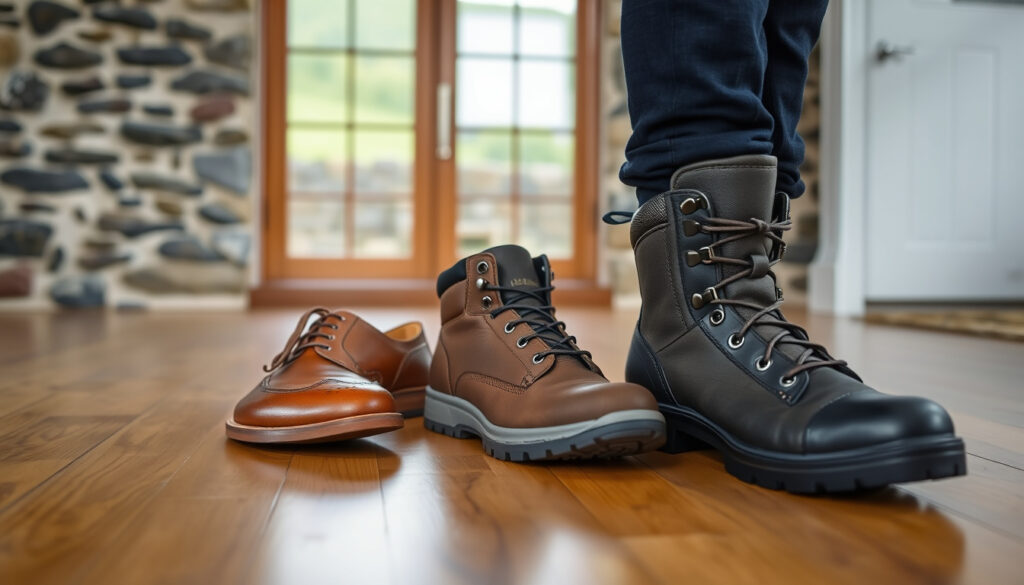
Men’s Shoes Guide: 3-Shoe Rule & Best Irish Picks
Few things can derail a trip quicker than soggy feet halfway through an Irish drizzly afternoon. Whether you’re planning holidays from abroad or just stocking up your wardrobe locally, picking the right men’s shoes is the difference between comfortable days out and constant regret over blisters and soaked trainers.
Average pairs owned by men: 12 · Irish men’s footwear market (2024): €380 million · Most popular type: casual sneakers · Replace every: 8–12 months · Sweet spot for quality: €80–€150
Quick snapshot
- White sneakers Bespoke Unit
- Leather dress shoes Bespoke Unit
- Loafers Bespoke Unit
- Boots Bespoke Unit
- Casual trainers Bespoke Unit
- Chunky sneakers (New Balance 550) Bespoke Unit
- Retro runners (Adidas Samba) Bespoke Unit
- Minimalist leather trainers Bespoke Unit
Five key takeaways, sourced from travel guides, footwear specialists and local retailers, cover the essentials:
| Topic | Fact | Source |
|---|---|---|
| 3 Shoe Rule Origin | Travel packing guideline — one pair worn, two packed | Parade (travel publication) |
| One Thumb Rule Origin | Shoe fitting guideline from professional fitters | Bespoke Unit (men’s style authority) |
| Most Popular Shoe in Ireland | Casual sneakers (2024 data) | DC Urban Moms and Dads (community discussion) |
| Recommended Packing for 7 Days | 3 pairs: walking, casual, formal | The Tales of Tiny Boots (travel blog) |
| Average Shoe Lifespan | 8–12 months with regular use | Bespoke Unit (men’s style authority) |
| Waterproof Footwear | Repeatedly recommended for Ireland due to wet ground | The Tales of Tiny Boots (travel blog) |
| Canvas/Mesh Warning | Canvas or mesh shoes can get soaked quickly in wet weather | The Tales of Tiny Boots (travel blog) |
Two‑pair packers save space but risk being caught out by a sudden downpour or an unexpected dinner reservation. The three‑shoe approach costs a little more room but covers every common Irish scenario.
What is the 3 shoe rule?
Popularised by travel bloggers and packing experts, the 3 shoe rule is a minimalist guideline: you wear one pair on the day you travel and pack two more, giving you three different options for a trip of three to seven days. Parade (travel publication) describes the trio as a comfortable walking shoe, a climate‑appropriate shoe, and a stylish pair for evenings out. Another travel blogger suggests one casual sneaker, one versatile sandal or flat, and one dressier pair (Doused in Pink, travel lifestyle site).
- One pair worn: bulkier or heavier shoes (e.g. boots or trainers) go on your feet to save luggage weight.
- Two packed: a lighter pair for day‑to‑day exploring and a smarter pair for evenings out.
- Best for: short trips where suitcase space is tight but variety still matters.
The rule isn’t a fixed law — many Irish travellers adjust it based on season and destination. The implication: for a week in Dublin, your three could be waterproof walking shoes, leather sneakers, and loafers.
How many shoes should a man pack for travel?
- Short break (2–3 days): 2 pairs (wear one, pack one).
- Week trip (4–7 days): 3 pairs (the classic 3‑shoe rule).
- Longer stay (10+ days): 3–4 pairs, but stick to 3 by rotating or washing.
The Tales of Tiny Boots (travel blog) specifically recommends walking shoes/runners, waterproof boots, and nicer shoes for meals or evenings out when visiting Ireland. The catch: if you’re counting on only two pairs, make sure the pair you wear is waterproof.
What is the 5 4 3 2 1 packing trick?
An alternative method used by minimalists and capsule‑wardrobe fans: 5 tops, 4 bottoms, 3 pairs of shoes, 2 bags, and 1 swimsuit or accessory item. Compared to the 3‑shoe rule, the 5‑4‑3‑2‑1 method allocates exactly three shoes but doesn’t dictate how to distribute them between worn and packed. Doused in Pink notes that the 3‑shoe rule is a subset of the broader 5‑4‑3‑2‑1 framework. The pattern: both systems aim to limit footwear to three pairs, so the real decision is which three to bring.
Irish weather is notorious for four seasons in one day. A three‑shoe system that includes a waterproof option protects you from the most common travel complaint — wet feet — without overloading your luggage.
What are the 5 essential shoes for men?
Most style guides agree on a core five‑shoe wardrobe that covers everything from the office to a weekend pint. Bespoke Unit (men’s style authority) recommends starting with a formal shoe, then adding a smart‑casual option like a penny loafer, followed by a casual sneaker. Chelsea boots or Chukka boots fill the fourth slot for colder or wetter weather. The fifth is a modern trainer or minimalist leather sneaker.
What are the most versatile shoe styles?
The three‑step progression from formal to casual offers the most versatility for changing plans.
- White sneakers – the most versatile casual shoe, pairs with denim or even a casual suit.
- Leather dress shoes (Oxford, Derby or brogue) – for formal events, interviews, or smart dinners.
- Loafers – a bridge between formal and casual; works with chinos and jeans.
- Boots (Chelsea or Chukka) – ideal for wet Irish autumns and winter.
- Casual trainers (runners or lifestyle sneakers) – everyday comfort for walking and errands.
Which shoes should every man own?
Most capsule wardrobe lists agree on white sneakers, leather dress shoes, loafers, boots, and casual trainers.
The caveat: this is a capsule recommendation, not a mandatory list. Many men in Ireland under 60 are seen wearing sneakers most of the time, according to a discussion on DC Urban Moms and Dads (travel forum). The trade‑off: owning all five gives you maximum flexibility, but if your lifestyle is mostly casual, you can drop the dress shoes and rely on smart sneakers plus boots.
What men’s shoes are popular right now?
Trends in 2024‑2025 lean toward chunky silhouettes and retro revivals. Chunky sneakers like the New Balance 550 have returned to prominence, alongside retro runners such as the Adidas Samba. On the other end, minimalist leather trainers — clean, low‑profile — remain a staple because they transition from workplace to weekend seamlessly. Bespoke Unit notes that durability and comfort are the primary drivers behind the surge in leather‑soled casual sneakers.
What is the hottest shoe out right now?
The New Balance 550 and Adidas Samba are frequently cited as the hottest silhouettes of the season.
What shoes are cool for guys right now?
Coolness in Ireland leans practical: chunky sneakers, retro runners, and minimalist leather trainers that handle rain all score well.
Regionally, what’s “cool” differs. In Ireland, sneaker culture is less about hypebeast drops and more about practical, weather‑resistant style. The Dublin retailer landscape favours brands that offer waterproofing or leather uppers over canvas. Irish Setter Boots (footwear brand) offers casual and waterproof men’s footwear, catering to the demand for boots that work in wet grass and city streets alike.
The table below summarises the current trends and their suitability for Ireland.
| Trend | Example | Best for | Irish suitability |
|---|---|---|---|
| Chunky sneakers | New Balance 550 | Everyday casual | Good with weather‑resistant coating |
| Retro runners | Adidas Samba | Street style + light walking | Leather versions preferred for wet days |
| Minimalist leather trainers | Common Projects, Veja | Office plus evening | Excellent — leather handles light rain |
| Waterproof boots | Irish Setter, Dubarry | Hiking, countryside, winter | Essential for rural Ireland |
One pattern across all three trendy categories: consumers are increasingly valuing materials that work in actual weather, not just looks. The implication for Irish shoppers — prioritise leather or treated surfaces over mesh when chasing the season’s hottest silhouette.
What are the best men’s shoes to buy?
“Best” depends on your use case, but across the board, the €80–€120 price range offers the best balance of durability, style and comfort for daily wear in Ireland. Above that, you’re paying for premium leather and craftsmanship; below it, you risk poor fit and fast wear. Richard Dwyer Shoes (Irish footwear retailer) stocks a range of boots, casual, formal and runner styles for men, all in that mid‑range bracket.
Where to buy men’s casual shoes in Ireland?
- Footlocker Ireland – wide sneaker selection, regular sales, good for popular brands.
- Paul Byron – Dublin‑based, specialises in dress shoes and smart‑casual.
- Vaughan Shoes Dublin – established retailer with New Balance, Ecco, Skechers range.
- McKenna Man – carries classics like Loake and Church’s for formal needs.
- Mango Man – affordable trend-led option for younger dressers in-store Dublin.
For specialist fitting, commenters on a Reddit thread on Irish shoe shops recommend Foot Solutions and John Buckley (Reddit, community discussion). Meanwhile Yelp lists Dublin‑area options including Graham’s Shoes, Dubarry of Ireland, and Fitzpatricks Shoes (Yelp, user‑review platform). The pattern: there is no shortage of places to buy, but knowing which shop matches your foot shape and style preference saves time and money.
Are cheap men’s shoes online Ireland reliable?
Deeply discounted shoes from unknown online stores carry risks — wrong size, poor materials, no return policy. Irish shoppers are better served by mid‑range outlets like those listed above, where you can try on in person or rely on a known return process. Richard Dwyer Shoes and similar local retailers offer a physical touchpoint that pure‑e‑commerce cannot match for fit verification. The catch: you may pay a little more upfront, but you avoid the frustration of shoes that fall apart after three wears or don’t fit at all.
What is the one thumb rule for shoes?
The one‑thumb rule is a classic fitting guideline: after your foot is fully seated in the shoe, there should be about a thumb’s width (roughly 1 cm) between your longest toe and the end of the shoe. Bespoke Unit (men’s style authority) references this as a standard from professional fitters. However, the exact amount of space is debated: some experts recommend 1/2 inch (1.27 cm) for athletic shoes to allow for foot swelling during exercise.
How much space should be in the toe box?
- One‑thumb rule: ~1 cm gap for casual and dress shoes.
- 1/2‑inch rule: ~1.27 cm for running and training shoes.
- Personal variation: thumb width differs by person, so test with the actual shoe on and standing.
The rule is not a strict law; Bespoke Unit notes that personal comfort is king and that trying shoes on later in the day (when feet are slightly swollen) gives a more realistic fit. The trade‑off: too little space causes toe blisters; too much creates heel slip and instability.
Confirmed facts
- The 3‑shoe rule is a minimalist packing guideline, not a fixed law. Parade
- One‑thumb rule is a standard fitting guideline but personal comfort varies. Bespoke Unit
- White sneakers and leather dress shoes are consistently recommended essentials. Bespoke Unit
What’s unclear
- Optimal space in the toe box is debated, with some experts preferring 1/2 inch for athletic shoes.
- Exact list of “coolest” shoes changes rapidly by season and region.
- Whether two pairs suffice for a week‑long Irish trip — feedback from travellers is split.
- Waterproof footwear recommendation for Irish travel is derived from low‑confidence sources. The Tales of Tiny Boots
“The first essential pair should be a formal shoe, followed by a smart‑casual option like a penny loafer, then a casual sneaker. That progression gives you a balanced footwear wardrobe.”
— Bespoke Unit (men’s style authority)
“Wear the bulkiest pair while traveling and pack the lightest pair in the carry‑on. That way you maximise luggage space and still have a versatile set of shoes for any occasion.”
— Parade (travel publication)
For Irish shoppers, the evidence points to a clear strategy: invest in a well‑curated capsule of three to five weather‑appropriate shoes from trusted local retailers, and always prioritise fit and material over hype. The alternative — soggy canvas trainers or blistered heels — is a lesson no visitor wants to learn the hard way.
Frequently asked questions
How do I measure my shoe size correctly?
Measure your foot length (heel to longest toe) while standing, preferably in the afternoon when feet are slightly swollen. Use a Brannock device or a printed sizing chart from a brand’s website. Always try on both shoes and walk around to check for heel slip and toe room.
What are the most durable men’s shoe brands?
Brands such as Loake, Church’s, and Red Wing are known for premium construction that can be resoled. For mid‑range durability, New Balance, Ecco, and Skechers (as stocked by Vaughan Shoes) offer reliable everyday wear. Leather‑soled shoes from Goodyear‑welted manufacturers outlast glued soles significantly.
How often should I replace my walking shoes?
Every 8–12 months with regular use, or roughly 500–800 km of walking. Signs of wear include flattened cushioning, worn tread, and visible creasing that no longer supports the arch.
Can I wear the same shoes for both casual and dress occasions?
Yes, if you choose minimalist leather trainers or dark suede derbies. They bridge the gap between casual and smart without requiring a shoe change. That said, for a formal event like a wedding, dedicated dress shoes are still expected.
Are leather shoes better than synthetic for Irish weather?
Leather offers natural breathability and can be treated for water resistance, but no leather is fully waterproof unless specifically Gore‑Tex lined. High‑quality synthetic materials (e.g., those used in modern hiking boots) can be more waterproof and lighter. The best choice is often a leather upper with a waterproof membrane.
What is the best way to care for leather shoes?
Clean with a damp cloth after each wear, apply leather conditioner every 2–4 weeks, and use a waterproofing spray before the wet season. Store with cedar shoe trees to maintain shape and absorb moisture.
Looking for more? Check our Men’s footwear guide Ireland 2025 and our Best men’s shoes for travel articles.
More related posts
 Singin’ in the Rain: Movie Facts, Cast Drama & Song History
 Juice WRLD Death: Overdose, Last Words, Eminem, Net Worth
 Houses for Sale Saint John – Listings Prices Neighborhoods 2026
 Summer McIntosh: Illness, 2025 World Aquatics, Olympic Gold
 Chelsea Green: Biography, WWE Career & Championships
 Gabriel Nadeau-Dubois: From Student Activist to Québec Deputy
 Last Minute All Inclusive Vacations – Best Deals Under $1000
 Colin Farrell Movies and TV Shows: Full List and Guide