Where Was Shogun Filmed – British Columbia Locations Guide
The FX adaptation of James Clavell’s 1975 novel brought seventeenth-century Japan to screens worldwide in 2024, but the actual filming took place thousands of miles from Tokyo. Production for the ten-episode series unfolded across the coastal landscapes of British Columbia, Canada, from September 2021 through June 2022. A dedicated crew of 340 local professionals constructed elaborate period sets, transforming Canadian forests, beaches, and industrial sites into the feudal Japanese world envisioned by Clavell. While the series draws heavily from Japanese history and culture, limited availability of undeveloped land in Japan made filming impractical there, prompting producers to seek locations that could authentically replicate the era’s distinctive geography.
The decision to center production in Vancouver and surrounding areas reflects practical realities facing large-scale television productions. Vancouver’s film industry infrastructure offered multiple sound stages, experienced crews, and the diverse terrain necessary to depict various Japanese settings within a concentrated geographic area. The production ultimately wrapped on June 30, 2022, after a ten-month schedule that exceeded initial projections, with the completed series premiering on FX and Hulu in February 2024.
Where Was Shōgun Filmed?
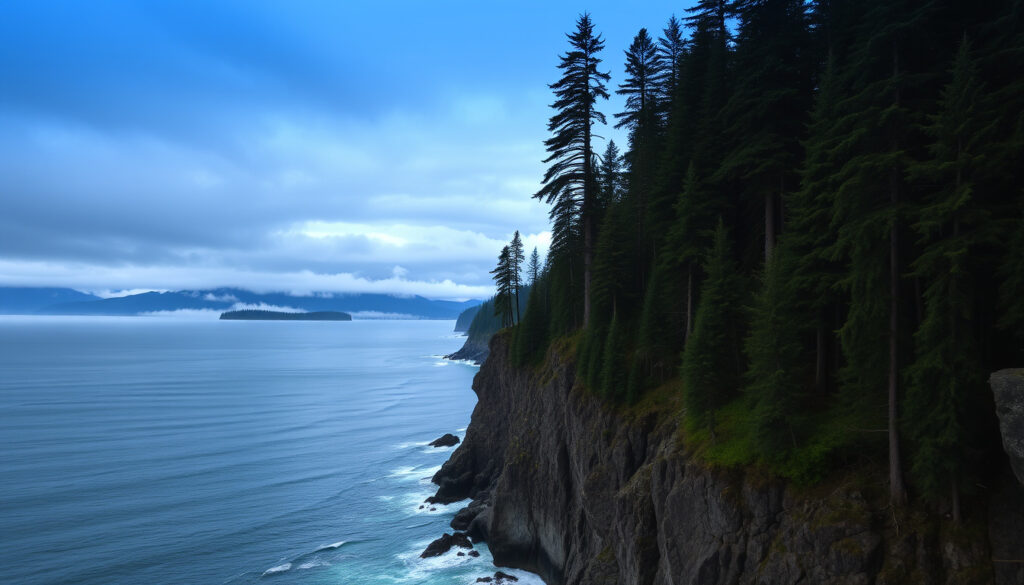
Shōgun filmed primarily in and around Vancouver, British Columbia, with specific sites distributed across the region. The production utilized locations ranging from coastal beaches on Vancouver Island to industrial sites in Port Moody, each selected for its visual resemblance to seventeenth-century Japanese landscapes. Local carpenters built extensive sets, while production designers imported authentic materials including fabrics, swords, and even a Japanese pine tree to ensure visual accuracy.
Vancouver, BC, Canada
Steveston, Fort Langley
Props and minimal shooting
Sept 2021 – June 2022
The production team identified several specific sites throughout British Columbia that served distinct purposes within the narrative. These locations were chosen for their ability to convincingly portray different settings from the novel, including fishing villages, castle grounds, harbor areas, and coastal landscapes.
- British Columbia’s coastal terrain closely matched feudal Japan’s geography, offering forests, beaches, rivers, and mountains within a short drive of Vancouver studios
- The region contains over 100 sound stages, making it a one-stop production hub for complex television series requiring both interior and exterior filming
- Vancouver has established itself as a major filming destination, hosting 50 or more simultaneous productions during peak periods
- Limited undeveloped land in Japan made authentic period filming there impractical for a production of this scale
- Canadian tax incentives and the ready availability of experienced film crews made the location economically attractive
- Production designer Helen Jarvis, based in the UK, oversaw the visual design while working with local construction teams
| Filming Location | Depicted Setting | Notable Details |
|---|---|---|
| Wya Point, Ucluelet | Erasmus shipwreck on Izu Peninsula | Mountainous west coast impressed Japanese crew members |
| Minaty Bay | Fishing village of Ajiro | Previously used for The Last of Us and Percy Jackson |
| Flavelle Sawmill, Port Moody | Osaka Castle, harbor, temple, Black Ship | Built around manmade inlet at a mill closed 1909-2014 |
| Rocky Point Boat Launch | Osaka harbor scenes | Adjacent to Flavelle Mill location |
| Whytecliff Park, West Vancouver | Small cove after storm | Previously featured in Legion, Siren, Once Upon a Time |
| Steveston and Fort Langley | Various village and period sets | Ornate local builds praised by cast |
Was Shōgun Filmed in Japan?
While Shōgun draws extensively from Japanese history and culture, actual filming in Japan remained minimal. Production records indicate that some scenes and materials came from Japan, including authentic props such as fabrics, swords, and a Japanese pine tree that were imported for use on set. Wikipedia’s production notes confirm limited Japanese involvement, primarily for establishing authenticity rather than principal photography.
Limited Japanese Production Elements
The production team prioritized authenticity in materials and cultural representation while conducting the bulk of filming in Canada. Several factors contributed to this approach, with land availability being the primary constraint. Seventeenth-century Japan simply does not offer the undeveloped tracts of land that period productions require for building sets and positioning camera equipment.
Some scenes may have been shot in Japan for specific establishing shots, though documentation of these remains sparse. The UK also served as a filming location for certain sequences, though details about specific UK scenes are not extensively documented in available sources.
The series took a hybrid approach, importing Japanese materials and potentially capturing select footage in Japan while conducting principal photography in Canada. This balanced authenticity with practical production requirements.
Authenticity Through Materials
Rather than filming extensively in Japan, the production invested heavily in authentic Japanese materials brought to Canada. Local carpenters constructed elaborate sets using traditional techniques, while imported elements added genuine Japanese character to the constructed environments.
Why Was Shōgun Filmed Primarily in Canada?
The decision to film Shōgun primarily in British Columbia stems from a combination of geographic similarity, infrastructure availability, and practical constraints. British Columbia’s coastal landscapes bear striking resemblance to parts of feudal Japan, offering the forests, beaches, rivers, and mountains that the production required to depict the novel’s varied Japanese settings.
Geographic and Infrastructure Advantages
Vancouver functions as a comprehensive production hub, with over 100 sound stages available for filming. This infrastructure allowed the production to move efficiently between interior sets and exterior locations, minimizing the logistical challenges that typically accompany large-scale period productions. Hollywood North Buzz reports that the region can accommodate numerous simultaneous productions, making it attractive for major television projects.
The ability to access diverse terrain within a short drive of studio facilities proved invaluable. A production depicting multiple Japanese regions—from coastal villages to castle compounds to harbor areas—could capture all necessary exterior scenes without extensive travel or location scouting in distant countries.
Expert Validation
Hiroyuki Sanada, who serves as both actor and producer on the series, noted Vancouver’s suitability for samurai dramas, describing the setup as “perfect” for the production’s needs. Producer Justin Marks echoed this assessment, calling British Columbia a “very good match” for depicting seventeenth-century Japan.
British Columbia’s film industry has developed substantial expertise in recreating period settings from various cultures. The 340-person Canadian crew brought experience from previous productions, allowing them to construct authentic-looking Japanese environments efficiently and effectively.
Shōgun Filming Timeline and Duration
Principal photography for Shōgun spanned approximately ten months, significantly longer than the six months initially planned. Production commenced on September 22, 2021, and continued through the winter and spring of 2022 before wrapping on June 30, 2022. The extended timeline reflected the complexity of building extensive sets and capturing the scope of Clavell’s story across multiple episodes.
Production Milestones
Cast members referred to the production as the “never-ending show” due to the extended filming schedule and numerous location changes. The timeline required careful coordination between different departments, particularly given the need to construct major sets like Toranaga’s ship beginning three months before shooting commenced at those locations.
Post-production work followed the wrap, with editing, visual effects, and sound design continuing into 2023. The completed ten-episode series premiered on February 27, 2024, on both FX and Hulu platforms.
Key Production Figures
- Showrunners: Justin Marks and Rachel Kondo
- Producer and actor: Hiroyuki Sanada
- Producer: Michaela Clavell (daughter of original author)
- Director: Tim Van Patten
- Episodes ordered: 10
- Premiere date: February 27, 2024
Filming Timeline
The production moved through distinct phases over its extended schedule, with preparation, principal photography, and post-production each requiring substantial time and resources.
- September 22, 2021: Principal photography begins in British Columbia
- Fall 2021 – Winter 2022: Set construction continues while filming at other locations
- Winter/Spring 2022: Major set pieces completed including Toranaga’s ship
- June 30, 2022: Principal photography wraps after extended schedule
- 2022-2023: Post-production including editing and visual effects
- February 27, 2024: Series premiere on FX and Hulu
What We Know and What Remains Unclear
Documentation of Shōgun’s production provides clear information about many aspects while leaving certain details uncertain or undocumented.
| Established Information | Uncertain or Undocumented Details |
|---|---|
| Primary filming in British Columbia, Canada | Specific extent of UK filming |
| Filming dates: September 2021 – June 2022 | Specific Japan filming locations if any |
| Specific Canadian sites documented | Whether public can visit filming sites |
| 340-person Canadian crew | Current condition of temporary structures |
| Importation of Japanese props and materials | Potential Season 2 filming plans |
Production Context and Significance
The Shōgun adaptation represents one of the most ambitious television productions ever mounted with substantial Japanese-language content. By choosing to film primarily in Canada while telling a distinctly Japanese story, the production navigated long-standing challenges facing international productions depicting Japanese historical periods.
The series achieved notable recognition in 2024, becoming the first Japanese-language production to win major awards. Production documentation emphasizes the visual authenticity achieved through imported Japanese elements and careful research into Clavell’s novel, though explicit analysis of historical fidelity to actual events and customs remains limited in available sources.
The collaboration between Japanese and Canadian creative teams demonstrates evolving approaches to cross-cultural production, bringing together local expertise with international resources to achieve ambitious storytelling goals. Vancouver’s established infrastructure played a crucial role in making this collaboration possible, providing the technical foundation needed for a production of this scope.
Challenges during filming included extensive outdoor rain sequences shot in period-accurate kimonos and elaborate wigs. Cast members, including Cosmo Jarvis who plays John Blackthorne, praised the proficiency and dedication of the Canadian crew in constructing authentic-looking environments.
Production Insights and Sources
Multiple sources have documented various aspects of Shōgun’s production, providing insight into the decisions and challenges faced by the creative team.
“Vancouver’s setup proved ‘perfect’ for samurai dramas, offering the terrain, infrastructure, and expertise necessary to realize the production’s ambitious vision.”
— Reported statements from Hiroyuki Sanada
“British Columbia served as a ‘very good match’ for depicting seventeenth-century Japan, combining geographic similarity with practical production advantages.”
— Producer Justin Marks
Documentation from industry publications and production notes confirms the scale of the undertaking, with hundreds of craftspeople working to construct elaborate period environments. The Canadian film industry’s reputation for handling complex international productions contributed to the decision to centralize filming there.
Summary
Shōgun filmed primarily in British Columbia, Canada, across multiple locations including Ucluelet, Port Moody, West Vancouver, and suburban areas around Vancouver. The production chose Canada over Japan primarily due to land availability constraints and Vancouver’s established infrastructure as a film production hub. Specific sites included Wya Point for coastal scenes, Flavelle Sawmill for Osaka Castle and harbor sets, Minaty Bay for village locations, and various studio facilities for interior shots. A 340-person Canadian crew built elaborate sets over a ten-month schedule, using imported Japanese materials to enhance authenticity. Filming concluded on June 30, 2022, with the series premiering in February 2024. Related coverage of anime and entertainment productions continues to track developments in cross-cultural television production.
Frequently Asked Questions
Were any scenes in Shōgun filmed in Japan?
Filming in Japan was minimal and limited to establishing shots or props. The bulk of production took place in Canada due to practical constraints including land availability.
Can I visit the filming locations from Shōgun?
Some locations like Whytecliff Park and Minaty Bay are publicly accessible parks. However, many sites were temporary set constructions that have since been removed, and some locations may have restricted access.
How long did Shōgun filming take?
Principal photography lasted approximately 10 months, starting September 22, 2021, and wrapping June 30, 2022. This exceeded the initial 6-month projection due to the production’s scope.
What sets were built for Shōgun in Canada?
The production built significant sets including Osaka Castle, a harbor area at Flavelle Sawmill, Toranaga’s ship, and various village environments. Local carpenters constructed over 1,000 shoji screens and imported numerous props from Japan.
Are the Shōgun locations historically accurate?
Production emphasis focused on visual authenticity through authentic Japanese materials and careful research into the novel’s settings. Direct analysis of historical fidelity to actual seventeenth-century Japan remains limited in available documentation.
Will Shōgun film Season 2 in the same locations?
IMDb notes mention Vancouver sites being considered for potential Season 2 sets, though official announcements about continuation have not specified filming locations.
More related posts
 Colin Farrell Movies and TV Shows: Full List and Guide
 Accident de la Route Aujourd’hui – French Autoroutes Clear of Major Crashes
 Melissa McCarthy Weight Loss: Surgery, Ozempic Denial & Career
 India Pakistan War News: 2025 Crisis, Military Power Comparison
 Happy Gilmore 2 Cast: Verified Actors & Release Details
 Canadian Dental Care Plan: Eligibility & How to Apply 2025
 One Piece: Episode Guide, Age Rating & Fan Questions
 2024 Ford Bronco Sport: Price, Specs, Reliability & RAV4